

 English
 日本語
日本語 Español


Industry News

Home / Media Centre / Industry News / Do I Need a Box Spring with a Memory Foam Mattress? What a Buyer Should Know
Product Category
NEW Category
Contact us
Do I Need a Box Spring with a Memory Foam Mattress? What a Buyer Should Know
You just unboxed a new all-foam memory foam mattress, the delivery truck is gone, and you are standing beside an old bed frame with a box spring that has seen better days. Before you lift 70 pounds of foam onto it, one question needs an answer: do I actually need a box spring with a memory foam mattress?
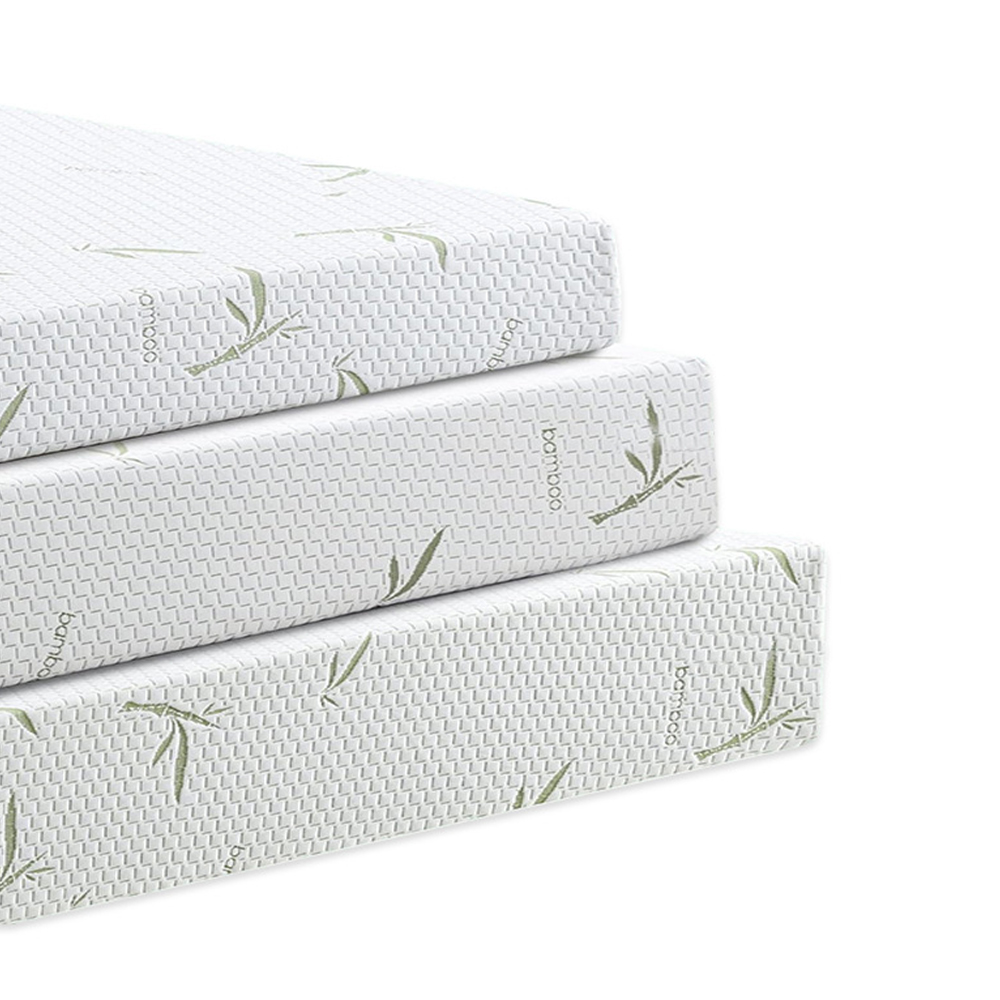 Wholesale Memory foam mattress Suppliers, Factory - Jiangsu Wellcare Household AJiangsu Wellcare Household Articles Co., Ltd. is China wholesale Memory foam mattress suppliers and factory,Soft and supportive, enjoy a ...View Product →
Here is the conclusion up front: no — a traditional coil box spring is not needed, and it usually does more harm than good.
Why a Traditional Coil Box Spring Is the Wrong Base
To understand why, look at what a box spring was built to do. When people say "box spring," they usually mean a wooden or metal frame that contains a set of metal springs and is covered in fabric. It was designed for the coil mattresses of the early 20th century. An innerspring mattress moves with those coils; the box spring absorbs part of the body load and adds cushion under the existing spring layer.
A memory foam mattress works on a completely different principle. The foam contains no metal, no bounce, and it takes the shape of whatever lies beneath it. Put a dense sheet of viscoelastic foam over a springy base and the springs become an uneven surface. The centre, where your hips load the most, sinks further than the edges, creating a dip that only gets deeper as the foam loses its ability to rebound.
There are three specific reasons why a spring box fails at this job:
- Slat spacing. Many older box springs have a wooden frame with slats spaced 4–6 inches (10–15 cm) apart. Foam mattress warranties typically require slat gaps no larger than 3 inches (7.6 cm). Any wider and the foam starts to push through the gap, creating irregular stress where the foam meets the edge of a slat.
- Spring bounce. A coil box spring moves up and down as you shift position. Memory foam does not absorb that motion; it transfers it directly into the pressure-relieving layer, and the result is a restless night and a slowly stretching foam structure.
- Poor airflow. A traditional box spring is closed off underneath, and memory foam is one of the most heat-retentive sleep surfaces you can buy. When the bottom of the foam cannot breathe, heat builds up inside the material. Over time, temperature accelerates the permanent compression of viscoelastic foam — in simple terms, the mattress becomes soft and sags much earlier than it should.
These are not theoretical complaints. When we looked at warranty and customer-service records across the sleep industry, the most common reason for a rejected foam mattress warranty claim is the use of a spring-based foundation. The manufacturer can see exactly what kind of base the mattress sat on, and if it fails the rigidity requirement, the claim is denied.
What a Memory Foam Mattress Actually Needs From a Foundation
Forget the name "box spring." A memory foam mattress needs a table, not a trampoline.
The base has to meet three criteria:
- Flat. No bowed areas, no sagging middle, no ridge running across the centre.
- Rigid. When you press down with your hand, there should be no vertical give.
- Breathable. Air should be able to move under the mattress so heat and humidity can escape.
If the frame uses slats, keep the gaps at or below 3 inches (7.6 cm), and use slats that are at least 0.75 inches (19 mm) thick. A solid platform is the simplest option because there are no gaps to measure at all. More importantly, the right base affects how the foam interacts with your body. When the base is perfectly flat, the foam compresses evenly around your hips and shoulders, which is why the relationship between a memory foam mattress and spinal alignment is essentially a story of even support. The moment the base flexes, that even compression disappears.
This matters even more on a zoned support memory foam mattress. Zoned models use firmer foam in the middle third and a more flexible foam under the head and legs. The zones are calibrated for a flat surface. On a flexible box spring, the firm central zone presses into a lower spot, the softer zones sink at different rates, and the alignment benefits of zoning are completely lost.
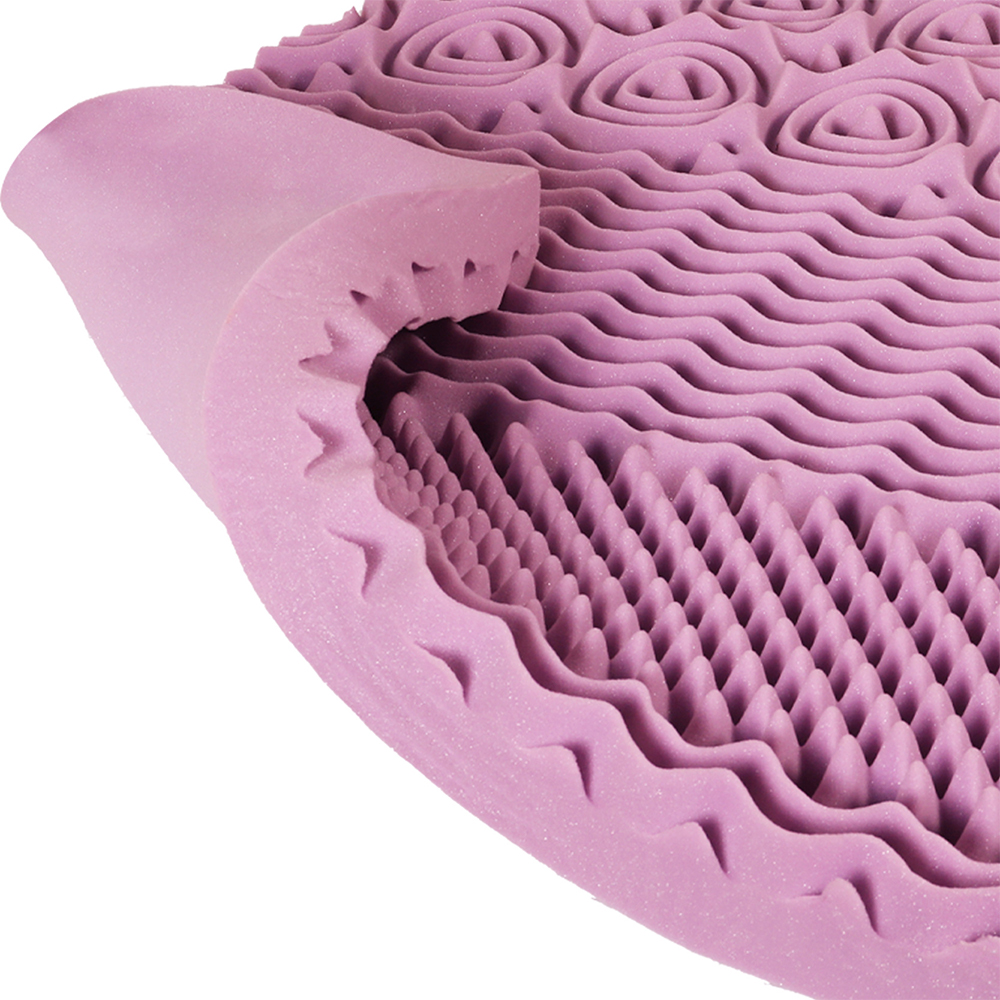 Wholesale Zoned memory foam mattress Suppliers, Factory - Jiangsu Wellcare HouseJiangsu Wellcare Household Articles Co., Ltd. is China wholesale Zoned memory foam mattress suppliers and factory,Zoned support for a mor...View Product →
Foundation Options That Work
You do not need a box spring under a memory foam mattress. These are the bases that actually work:
| Foundation | What it is | How well it works | Main drawback |
|---|---|---|---|
| Platform bed | Solid or slatted surface built into the frame | Excellent; simplest choice | Cheap frames may have slats set too far apart |
| Slat foundation | Rigid, fabric-covered low-profile base without springs | Very good; looks like a box spring without the bounce | Need to confirm it really has no springs |
| Bunkie board | Thin flat board placed over existing slats | Good for fixing wide slat gaps | Needs a centre support rail to prevent bowing |
| Adjustable base | Motorised frame that bends at the head and feet | Excellent; adds ergonomic positions | Higher cost |
| Floor | Mattress placed directly on clean hard flooring | Acceptable short-term | Poor airflow may trap moisture; avoid long-term |
There is an important trap to avoid at the point of sale: many retailers still sell something they call a "box spring" that is actually a rigid foundation. A modern low-profile foundation looks like the old box spring, but it contains no springs at all — just a solid wooden or steel frame. If you press the centre and the surface does not move, it will work fine under a memory foam mattress. The problem is that people buy a traditional spring-loaded box spring out of habit, because that is what they had with their older innerspring bed.
Take the extra 30 seconds to test the base before placing the mattress. Press down hard in the middle. If it bounces back, it is a coil box spring. If it stays still, it is a foundation, and it is a safe support.
When Keeping a Box Spring Might Make Sense
Two exceptions exist.
First, if your mattress is a hybrid style with a substantial coil layer, a spring-based box spring is less likely to cause problems. Hybrid mattresses still bounce, and a springy foundation complements them. Even then, the box spring should be level and relatively firm; a sagging one will still transfer its shape to the mattress above.
Second, if the thing you call a box spring is actually a rigid low-profile foundation with no springs, there is no reason to remove it. Many newer "box springs" sold with platform frames are exactly that. The rule is simple: press the centre, and if nothing sinks, it is fine.
In every other scenario, the answer is still the same: no box spring needed.
A 5-Minute Base Check Before You Set Up Your Bed
You can determine the right foundation in five minutes, without any specialist tools:
- Press the centre of the foundation with one hand. If you feel any vertical movement, the base is too flexible.
- Measure the slat gaps with a ruler. Anything wider than 3 inches (7.6 cm) means you will need a flat board over the slats.
- Look at the centre of the bed frame. Many metal and wooden frames rely only on the two side rails; they need a centre support rail or a heavy-duty footboard to keep the middle of the mattress from dropping.
- If the frame is rigid but the gaps are wide, place a 0.5–0.75 inch (12–19 mm) bunkie board over the slats before laying down the mattress.
- Check that the space underneath the bed is open. If the base sits airtight against the floor, raise it or change the base so that air can circulate.
Bottom Line
Do you need a box spring with a memory foam mattress? No. A traditional spring-loaded box spring offers nothing that memory foam needs, and it actively works against the two things that make foam comfortable: even support and airflow.
Spend your money on the right foundation instead. A platform bed with properly spaced slats, a rigid low-profile foundation, or an adjustable base will all keep the mattress in good shape and keep the warranty valid.
One last note from the manufacturer's side. WELLCARE has been making memory foam mattresses and related foam products for more than two decades, supplying retailers in North America, Europe and Asia. In our own factory, every mattress is tested with the assumption that it will sit on a flat, rigid surface, not on top of a spring. Our products — from standard foam mattresses to zoned and gel-infused models — are all engineered this way. That is why the advice is always the same: use a solid base, and let the foam do its work. If you already have a firm, flat base at home and want the feel of memory foam without replacing the entire mattress, a memory foam pad placed over that rigid surface gives you the same pressure-relieving comfort layer without any need to install a box spring. If you want to know more about how WELLCARE approaches foam construction, our manufacturing background and material research are a good place to start.
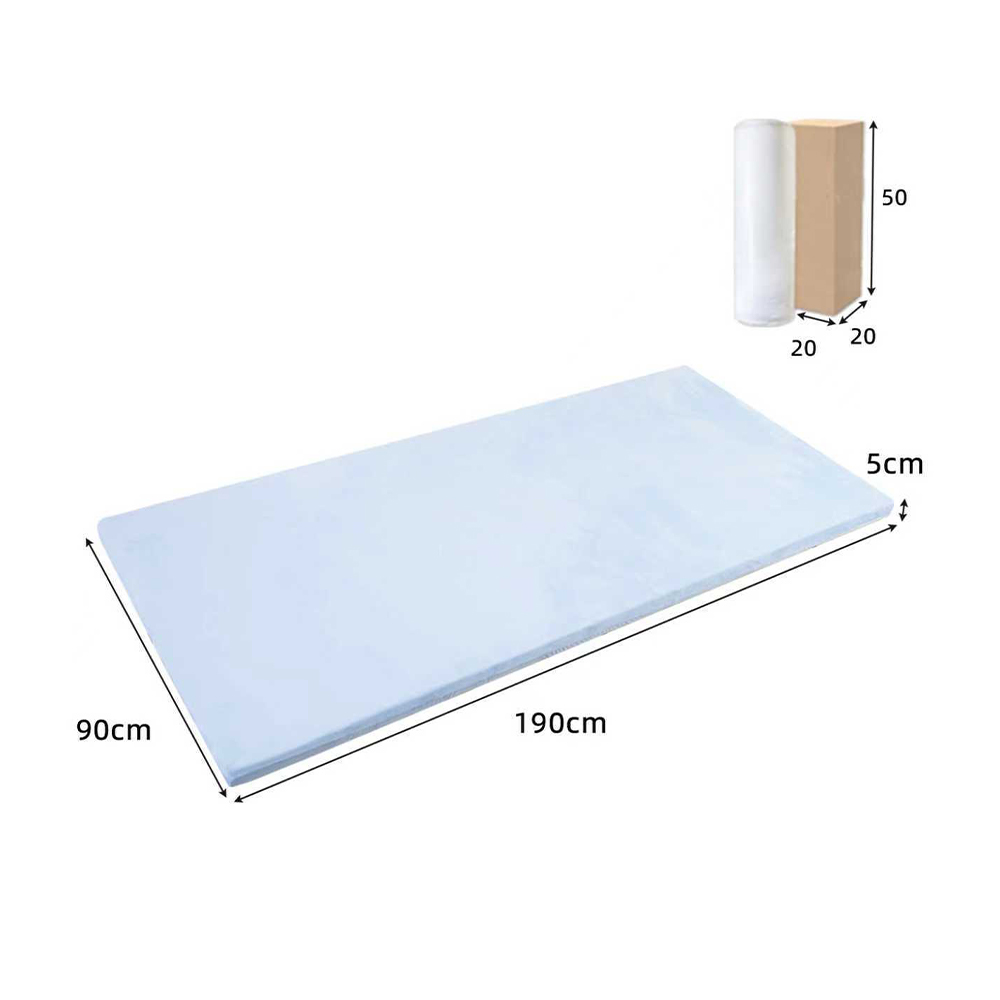 Wholesale Memory foam pad Suppliers, Factory - Jiangsu Wellcare Household ArticlJiangsu Wellcare Household Articles Co., Ltd. is China wholesale Memory foam pad suppliers and factory,One mattress is all it takes for a...View Product →
PREV:Can a Memory Foam Mattress Go on Box Springs? Yes, If the Foundation Is Right
NEXT:Do I Need a Box Spring for Memory Foam Mattress? A Complete Foundation Guide
NEXT:Do I Need a Box Spring for Memory Foam Mattress? A Complete Foundation Guide
Interested in cooperation or have questions?
Related News
WELLCARE was founded in 2003, boasting over a decade of profound and extensive experience.
Quick Links
Product
Media Centre
Contact Information
- [email protected]
- +86-517-84998062
- +86-15152354988
- No. 168 Nenjiang Road, Huaiyin District, Huai'an City, Jiangsu Province, China
Copyright © Jiangsu Wellcare Household Articles Co., LTD. All Rights Reserved.
Custom Memory Gel Mattress Manufacturers
