

 English
 日本語
日本語 Español

Instantly Renew Your Sleep
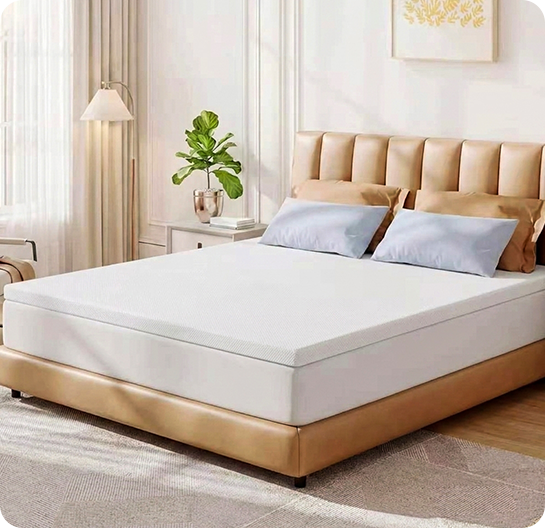
A Memory Foam Mattress Topper lays directly over your existing mattress, adding a new layer of contouring comfort and pressure relief. Experience noticeably better support and cushioning—without replacing your entire mattress—whether you're softening a too-firm surface or reviving an older one.
Key Features
Lay & Sleep: Goes right on top of your mattress for an instant comfort upgrade.
Pressure-Relieving: Responds to body heat and weight to evenly cradle pressure points.
Versatile Fit: Compatible with most mattress sizes to improve firmness or extend mattress life.
Designed for sleepers seeking better comfort and value—an easy, effective way to renew your bed and bring your ideal sleep closer every night.
-
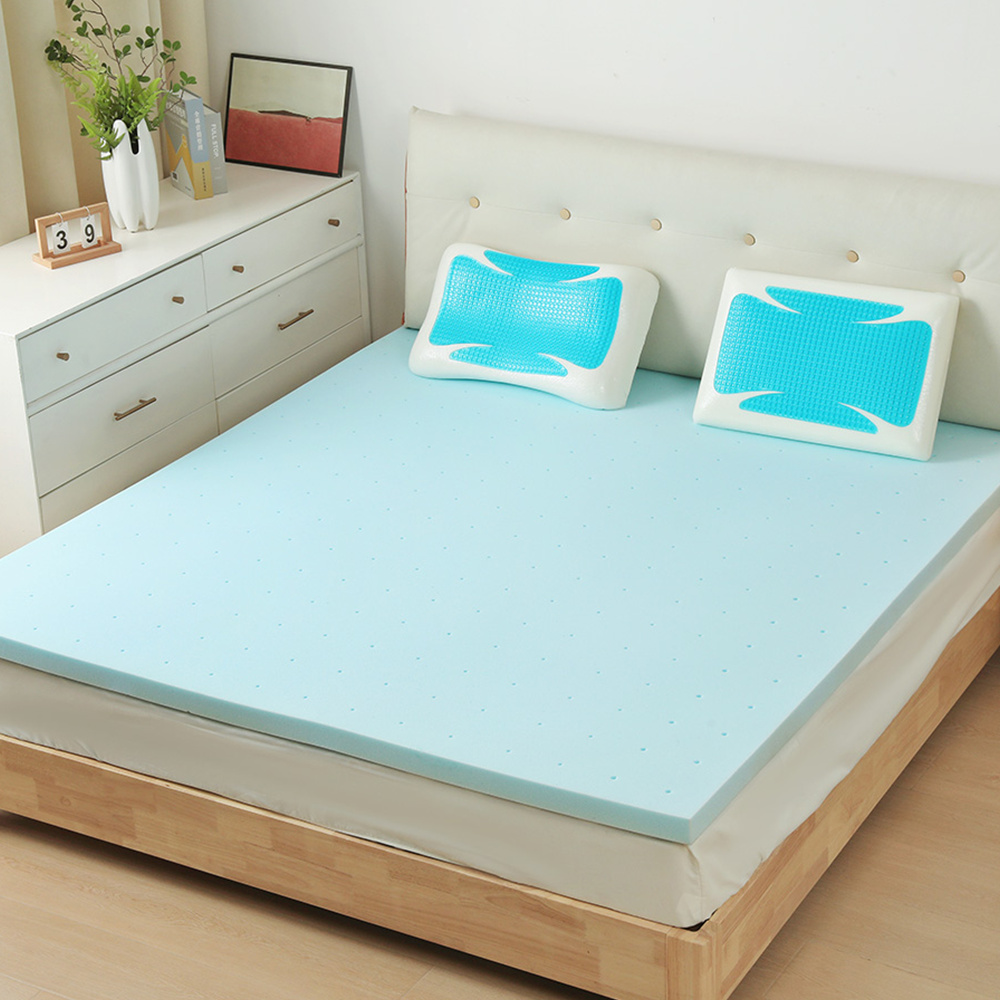 Memory foam gel pad
Soft and non-sagging, cool and reassuring. This mattress uses a high-density memory foam base with gel particl...
-
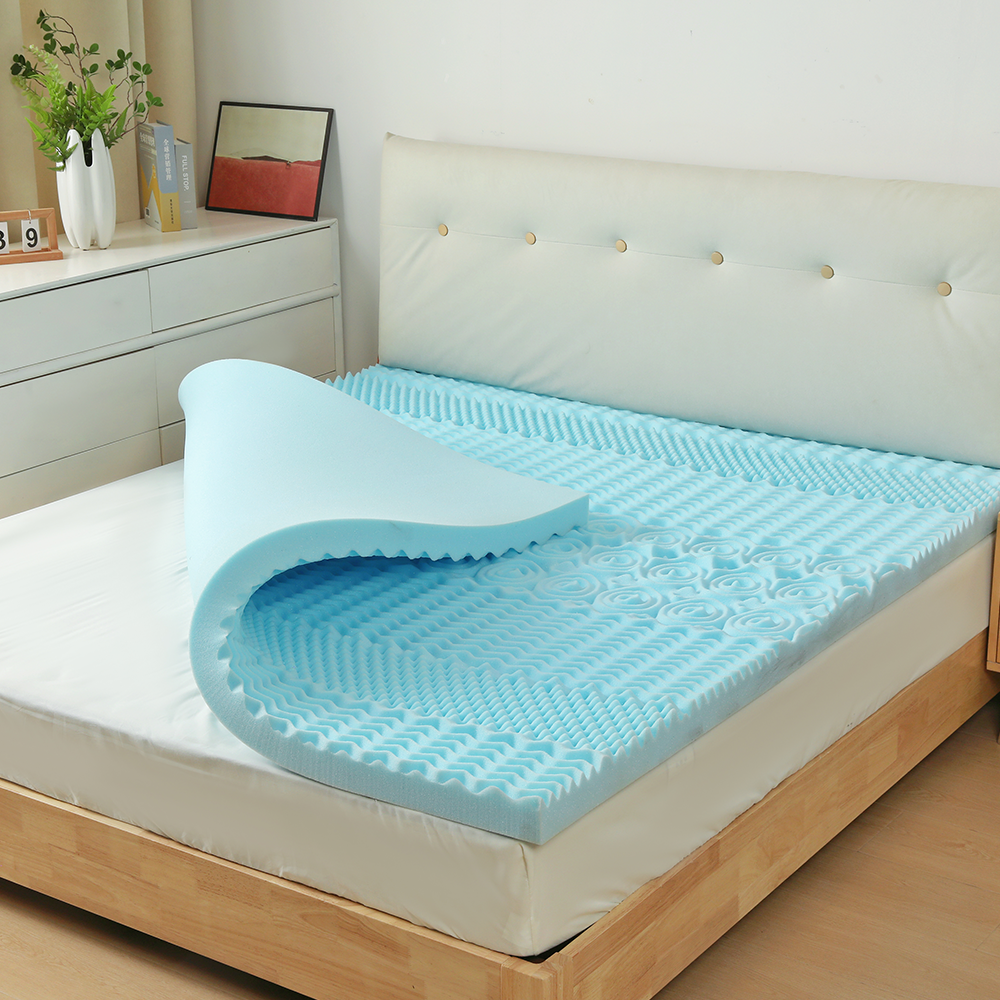 Embossed memory foam gel mattress
Precise support, enhanced comfort. This mattress features a high-density memory foam base infused with gel par...
-
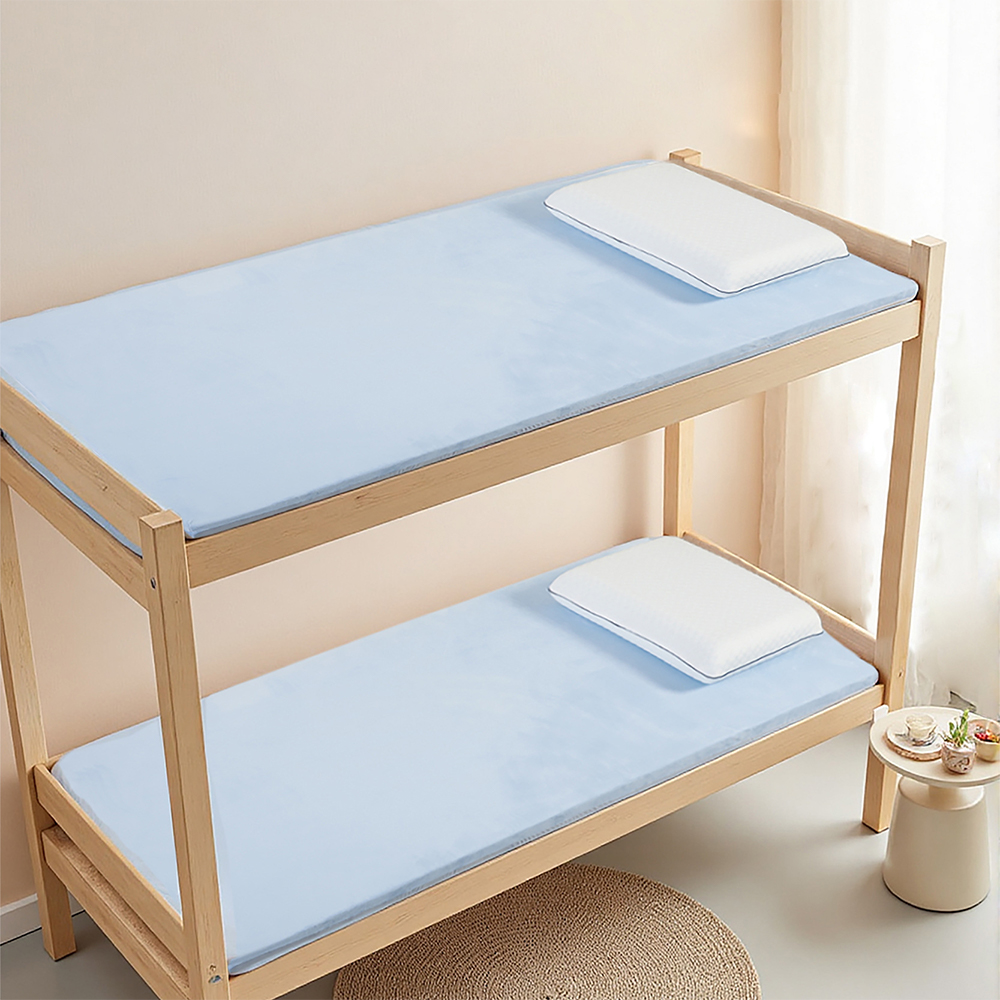 Memory foam pad
One mattress is all it takes for a restful sleep. This memory foam mattress is filled with high-density slow-r...
About Wellcare
Jiangsu Wellcare Household Articles Co., LTD.
As a famous China Gel Memory Foam Topper Manufacturers and Memory Foam Topper Factory, WELLCARE was founded in 2003 and has long been dedicated to the R&D and manufacturing of high-performance sleep materials and healthy home products. Centered on material innovation, the company keeps exploring foam solutions that are more comfortable, safer and more reliable to serve the global sleep market.
Led by a doctor-led R&D team, the company develops more than one hundred new foam materials every year. The product portfolio covers ordinary sponge, memory foam, gel foam, temperature-insensitive memory foam, quick-dry memory foam, flame-retardant sponge, antibacterial sponge and other categories, with continuous optimization of formulas and structural performance.
Led by a doctor-led R&D team, the company develops more than one hundred new foam materials every year. The product portfolio covers ordinary sponge, memory foam, gel foam, temperature-insensitive memory foam, quick-dry memory foam, flame-retardant sponge, antibacterial sponge and other categories, with continuous optimization of formulas and structural performance.
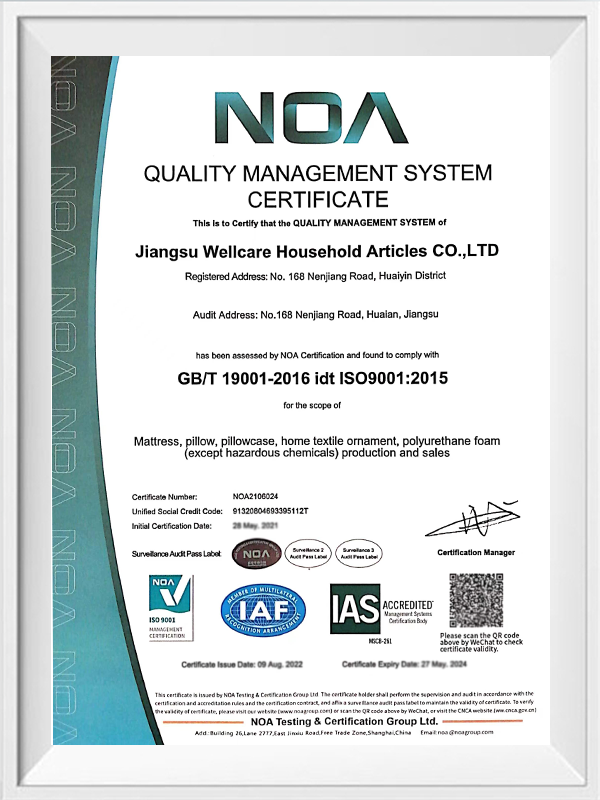
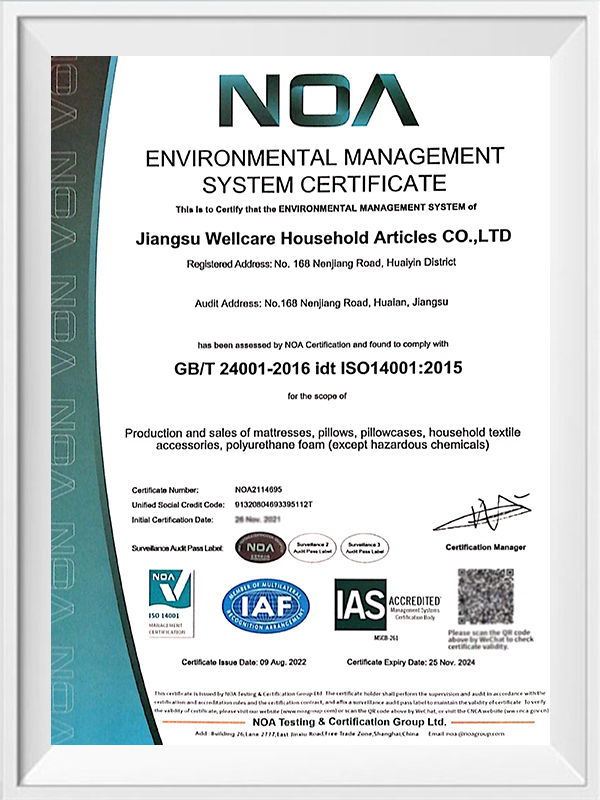
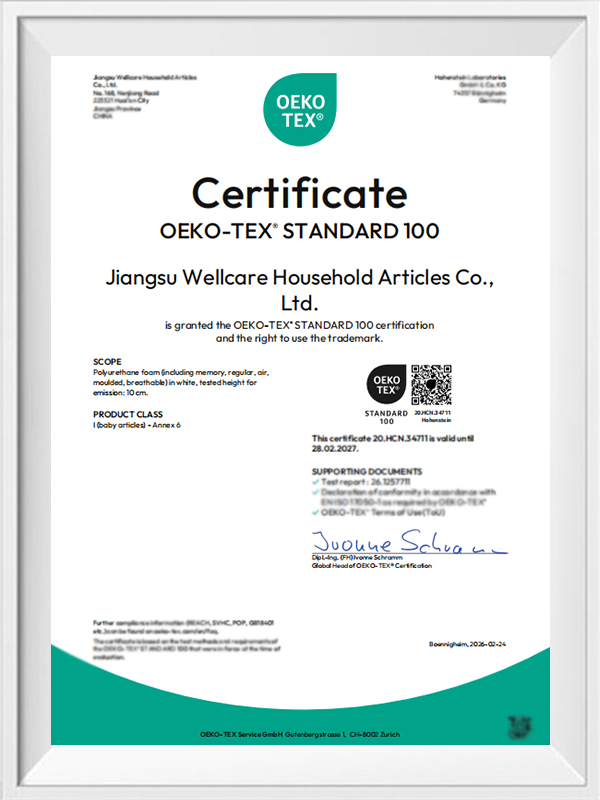
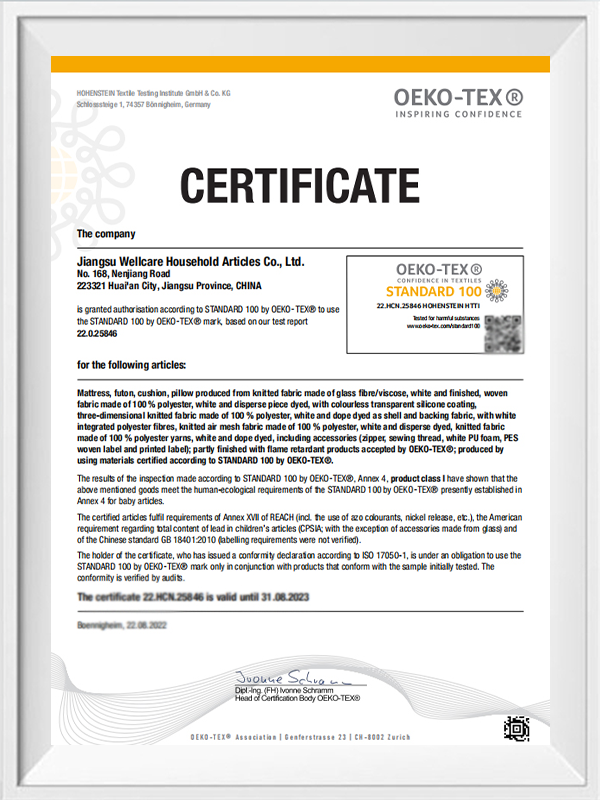
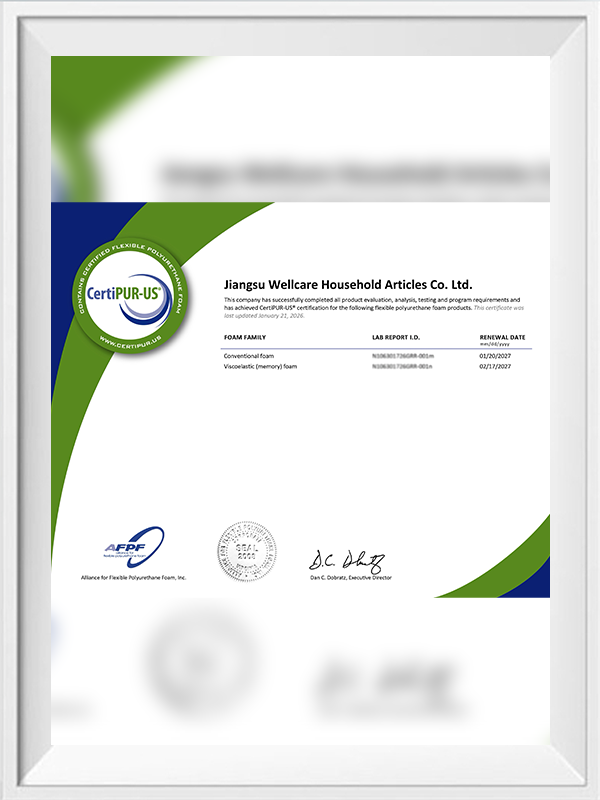
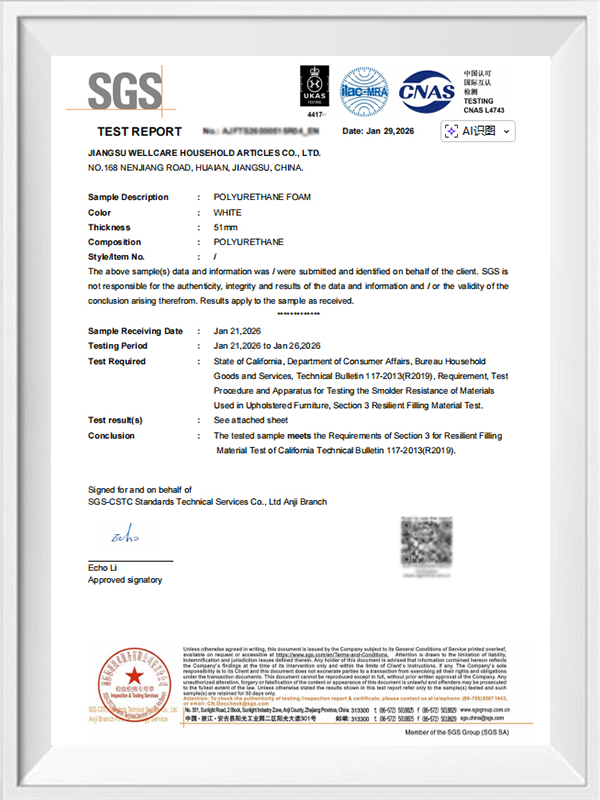
Certificate Of Honor
Message Feedback
Memory Foam Topper Industry knowledge
Jiangsu Wellcare Household Articles Co., Ltd. is a Memory Foam Topper manufacturer with over 20 years of foam R&D and production experience. Our topper range includes gel-infused, high-density, and quick-dry memory foam configurations, engineered to upgrade existing mattresses with targeted pressure relief and thermal management. We supply OEM and ODM programs for hospitality, healthcare, retail, and e-commerce channels worldwide.
Our toppers are produced in a continuous foaming and precision cutting facility, allowing consistent density control, edge profiling, and cover integration. We work from your target firmness, thickness, and thermal performance requirements to configure a topper that fits your market position and cost structure.
Product Range and Application Fit
Our memory foam topper portfolio is built around three core material systems, each matched to specific sleep environments and user profiles.
| Topper Type | Core Material | Best Application | Key Benefit |
|---|---|---|---|
| Gel-Infused Memory Foam Topper | Viscoelastic polyurethane with thermally conductive gel particles | Hot sleepers, warm climates, premium hotel upgrades | Delays heat concentration, improves perceived coolness |
| High-Density Memory Foam Topper | High-density slow-rebound foam, typically 50D and above | Firm mattress softening, pressure relief for side sleepers | Deep contouring, long-term resilience |
| Quick-Dry Memory Foam Topper | Open-cell foam with hydrophobic surface modification | Humid environments, healthcare, active users | Faster moisture transport, reduced humidity buildup |
We also offer temperature-insensitive memory foam for consistent performance across seasonal temperature swings, and flame-retardant or antibacterial formulations for contract and institutional projects.
Engineering and Material Control
Our doctor-led R&D team develops more than one hundred new foam formulations annually. For topper production, we control the following parameters to meet your specification:
- Density: From 40D to 80D, adjusted for support level and durability targets.
- Indentation Load Deflection (ILD): Tuned to achieve the desired firmness feel, typically 8–20 ILD for toppers.
- Recovery Time: Slow-rebound characteristics can be set from 3 to 8 seconds depending on contouring preference.
- Gel Particle Distribution: Uniform dispersion during polymerization for consistent thermal diffusion.
- Cell Openness: Controlled foaming chemistry to balance airflow and structural integrity.
Our continuous foaming line and CNC cutting equipment ensure consistent thickness tolerance (±2 mm) and clean edge profiles. We can laminate multiple layers with different densities to create zoned support or hybrid comfort systems.
Configuration and Customization
Every topper project is configured around your market requirements. We support the following customization options:
- Dimensions: Standard mattress sizes (Twin, Full, Queen, King, California King) or custom cut-to-size for RV, marine, or contract furniture.
- Thickness: 2 cm to 10 cm, with common options of 5 cm, 7.5 cm, and 10 cm.
- Cover: Knitted polyester, bamboo blend, Tencel, or quilted covers with zipper or non-slip bottom.
- Certifications: OEKO-TEX, CertiPUR-US, or REACH compliance can be arranged for specific markets.
- Packaging: Roll-packed in cartons or flat-packed in polybags, with private label printing available.
We provide pre-production samples within 3–7 days for standard configurations, and customized samples based on structural and density requirements.
Quality Assurance and Acceptance
Our factory operates under a continuous and standardized production organization mode, covering continuous foaming, mold forming, precision cutting, and post-processing. Quality control includes:
- Incoming raw material inspection for polyol, isocyanate, and additives.
- In-process density and hardness checks at foaming and cutting stages.
- Final dimensional inspection and visual grading before packaging.
- Batch retention samples for traceability and after-sales reference.
We can provide third-party inspection reports or coordinate with your designated inspection agency before shipment. Standard order lead time is 20–30 days, subject to quantity and customization level.
Information We Use to Configure Your Solution
To prepare an accurate proposal, we typically need the following project details:
| Information | Why It Matters |
|---|---|
| Target market and sales channel | Determines certification needs, packaging style, and price positioning. |
| Desired firmness level (soft, medium, firm) | Sets foam density and ILD range. |
| Thickness and size requirements | Affects material usage, roll-pack feasibility, and shipping volume. |
| Thermal performance expectation | Determines gel infusion, open-cell structure, or phase-change additives. |
| Cover material and design | Influences breathability, washability, and brand presentation. |
| Order quantity and delivery schedule | Enables accurate lead time and production planning. |
Share your project brief, and our engineering team will respond with a recommended configuration, target specifications, and quotation within 48 hours.
Frequently Asked Questions
What is the minimum order quantity for custom memory foam toppers?
Our MOQ is flexible, typically starting from 100 pieces per size for standard configurations. For new product development or market testing, we can discuss lower quantities with adjusted pricing.
Can you provide gel-infused memory foam toppers with specific cooling performance?
Yes. We control gel particle size, distribution, and foam cell openness to achieve the desired thermal delay. We can provide thermal conductivity data and comparative testing reports upon request.
Do you offer private label and custom packaging?
Absolutely. We support private label covers, printed cartons, and roll-pack or flat-pack options. Your branding can be applied to the cover, packaging, and instruction inserts.
What certifications can you support for export markets?
We can arrange OEKO-TEX Standard 100, CertiPUR-US, and REACH compliance for applicable markets. Our raw material suppliers provide documentation for flame retardancy and antibacterial properties when required.
How do you ensure consistent quality across large orders?
We use continuous foaming with automated density control, CNC cutting for dimensional accuracy, and batch sampling at every production stage. Each batch is traceable to raw material lots and production parameters.
Can you develop a topper with zoned support or multi-layer construction?
Yes. We can laminate different foam densities or incorporate cut channels to create zoned support. Our R&D team will work with your target pressure mapping or firmness profile to design the layer structure.
Related Products and Categories
Our portfolio also includes Product, Boneless Sofa, Single Seater Sofa for applications with different operating ranges, interfaces or integration requirements.
WELLCARE was founded in 2003, boasting over a decade of profound and extensive experience.
Quick Links
Product
Media Centre
Contact Information
- [email protected]
- +86-517-84998062
- +86-15152354988
- No. 168 Nenjiang Road, Huaiyin District, Huai'an City, Jiangsu Province, China
Copyright © Jiangsu Wellcare Household Articles Co., LTD. All Rights Reserved.
Custom Gel Memory Foam Topper Suppliers
