

 English
 日本語
日本語 Español


Industry News

Home / Media Centre / Industry News / Can You Put a Memory Foam Mattress on a Box Spring? Yes, but Check the Coils
Product Category
NEW Category
Contact us
Can You Put a Memory Foam Mattress on a Box Spring? Yes, but Check the Coils
Mattress Foundation Guide
Memory Foam Meets Box Spring: Why the Answer Isn't Simply Yes or No
You can physically place a memory foam mattress on a box spring, but if that box spring contains metal coils, you are setting up a slow, expensive problem. Here is how to tell what you own and what to use instead.
You have just moved into a rental, or you are finally retiring an old innerspring mattress, and the bedroom comes with a box spring. The natural instinct is to save the money and put the new memory foam mattress straight on top. Before you do, understand that the foundation is part of the mattress system. It carries the entire structural load of the foam above it.
The straight answer: if your box spring contains metal coils inside a wooden frame, it is the wrong base for memory foam. If it is a modern low-profile foundation with a solid top and no springs, it is perfectly fine. The label tells you very little; the construction underneath tells you everything.
The foundation is not furniture. It is the bottom layer of the mattress system — and memory foam will permanently conform to whatever shape sits beneath it.
What a Box Spring Was Originally Built For
Box springs were invented for innerspring mattresses. Their metal coils absorb the shock of sitting and lying down, their flexible surface lets the mattress springs compress together, and their height makes a bed easier to climb into. Independent coil movement was an advantage when the mattress above was full of springs waiting to bounce back.
Memory foam changes that equation. A dense viscoelastic layer is designed to soften with body heat, mould around your silhouette, and return slowly to its original flat shape. It does not need bounce. It needs a continuous, firm, perfectly level surface that does not flex a single centimetre.
Three Reasons a Coil Box Spring Damages Memory Foam
If you are still tempted to reuse what you already own, these are the three mechanical reasons the combination fails.
- Wide slat gaps create pressure lines. Older box springs hold slats eight to fifteen centimetres apart. Memory foam is heavy enough to push into the gaps, and every gap becomes a permanent groove.
- Coil flex breaks the support plane. Each coil moves independently. Your hips press one coil down, your shoulders press another, and the foam settles into a hammock shape it cannot repair.
- Restricted airflow increases heat retention. Memory foam traps body heat naturally, and the low profile plus fabric covering of a box spring blocks the circulation that would carry it away.
Foam quality changes the timeline, not the outcome. Denser layers resist impressions longer than soft ones, which is why manufacturers evaluate both the foam formula and the foundation. If you are choosing a mattress now, look at the layer construction and the warranty's foundation requirements before you decide.
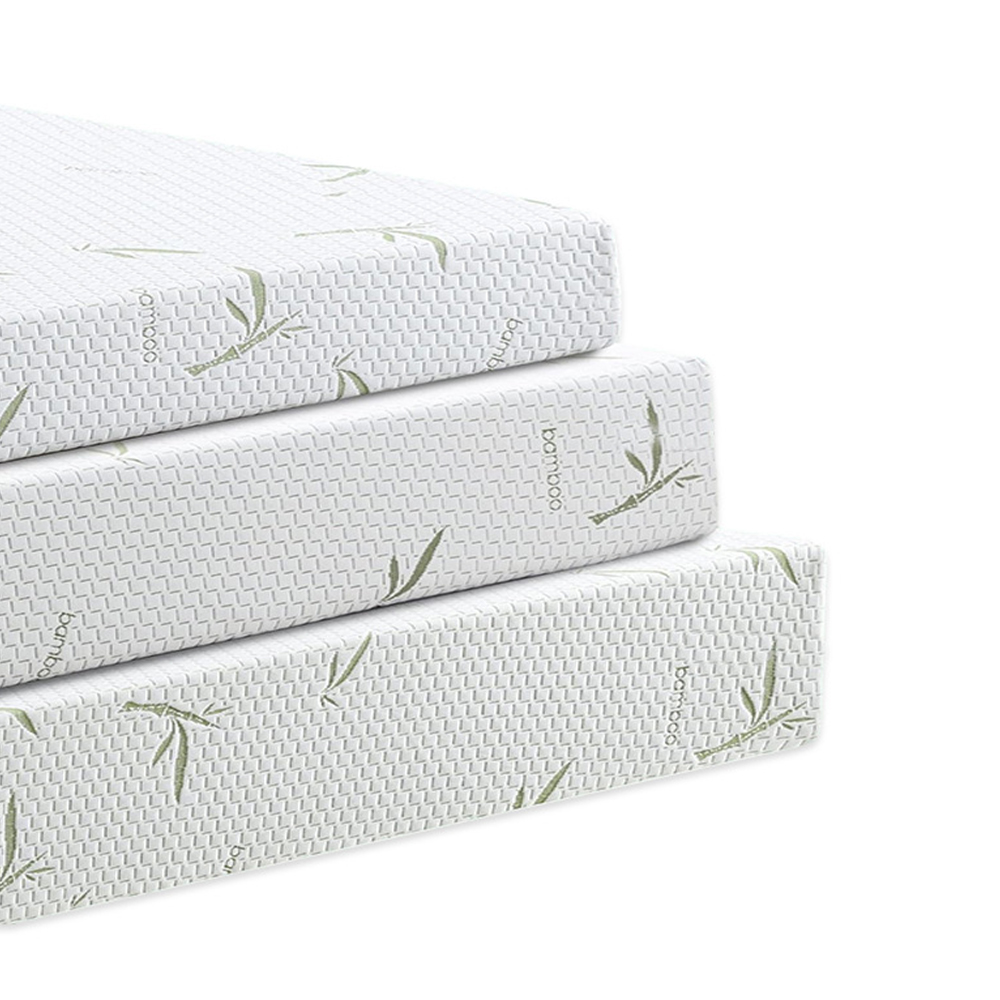 High-Density Memory Foam Mattress with Bamboo Leaf PrintThis memory foam mattress combines high-density slow-rebound foam with a bamboo leaf patterned cover, offering pressure relief and customizable sizes. It suits modern or Japanese-style bedrooms, and its rigid surface works well on solid foundations as discussed.View Product →
Danger: Ignoring foundation requirements can void the full warranty. A $600 mattress becomes a $600 mistake in the first month of use.
The One Type of Box Spring That Is Safe for Memory Foam
Here is where terminology confuses everyone. Many beds sold today as “box springs” contain no springs at all. They are low-profile foundations built from a plywood deck, a solid board, or slats spaced five centimetres or less apart. This kind of base is perfectly safe for memory foam because it presents the flat, rigid surface the material needs.
If the base already in your bedroom is this modern type, use it without hesitation. To confirm, press down in the centre with your full body weight. If the surface moves, flexes, or creaks, it is a coil unit. If it feels as solid as a concrete floor, it is a foundation.
| Foundation type | Construction | Memory foam verdict | Key detail |
|---|---|---|---|
| Traditional coil box spring | Wooden frame, metal coils | Not recommended | Coil flex and wide slat gaps cause permanent impressions |
| Low-profile solid-top foundation | Plywood or solid board, no springs | Recommended | The safe option sold under the name “box spring” |
| Slat base | Wooden slats | Recommended with spacing of 5 cm or less | Wider gaps need a cover board or bunkie board |
| Platform bed | Continuous deck or panelled top | Recommended | Simple, affordable, and easy to ventilate |
| Adjustable base | Hinged rigid segments | Recommended | Memory foam bends easily with the hinges |
A Two-Minute Inspection Before You Commit
Do not trust the label or the previous tenant's description. Run this quick check on any base before your mattress touches it.
- Press the surface in several places. Place your palm flat and lean in. If the surface gives, springs, or clicks against metal, it is a coil box spring.
- Measure the slat gaps. Use a tape measure or a smartphone. Anything wider than seven centimetres will transfer into the foam as lines or troughs.
- Sight along the frame edges. A bowed rail, a squeaking joint, or a broken slat creates an unstable base for any mattress.
- Look under the fabric. A solid sheet of plywood on top is a good sign, but confirm it is not hiding a coil layer below by pressing around the perimeter.
Warning: Many solid-top bases actually sit on a coil frame underneath. If the previous mattress was an innerspring model, assume the box spring is still doing its original job until you prove otherwise.
Better Foundations for a Memory Foam Mattress
If your inspection says “coil box spring,” the safest fix is to replace it rather than work around it. You have several good options, and none of them need to be expensive.
- Platform bed — a frame with a continuous deck or slats spaced five centimetres or less apart. The simplest and most common solution.
- Slat foundation — a separate slatted base that fits inside an existing bed frame. Spacing decides success, so understand how slat spacing changes the verdict before buying.
- Adjustable base — a powered foundation that raises your head and feet. Memory foam flexes naturally with the hinges, but check how foam behaves on adjustable frames before switching.
- Bunkie board — a stiff panel placed over a metal frame or coil box spring, converting an old base into a temporary platform.
- The floor — a clean, dry, ventilated space works for a few weeks, but dust and moisture make it a poor permanent home.
For foam owners worried about heat, support is only half the story. If your current mattress sleeps warm, a gel-infused or perforated layer helps pull heat away from your body, even on a perfectly rigid base.
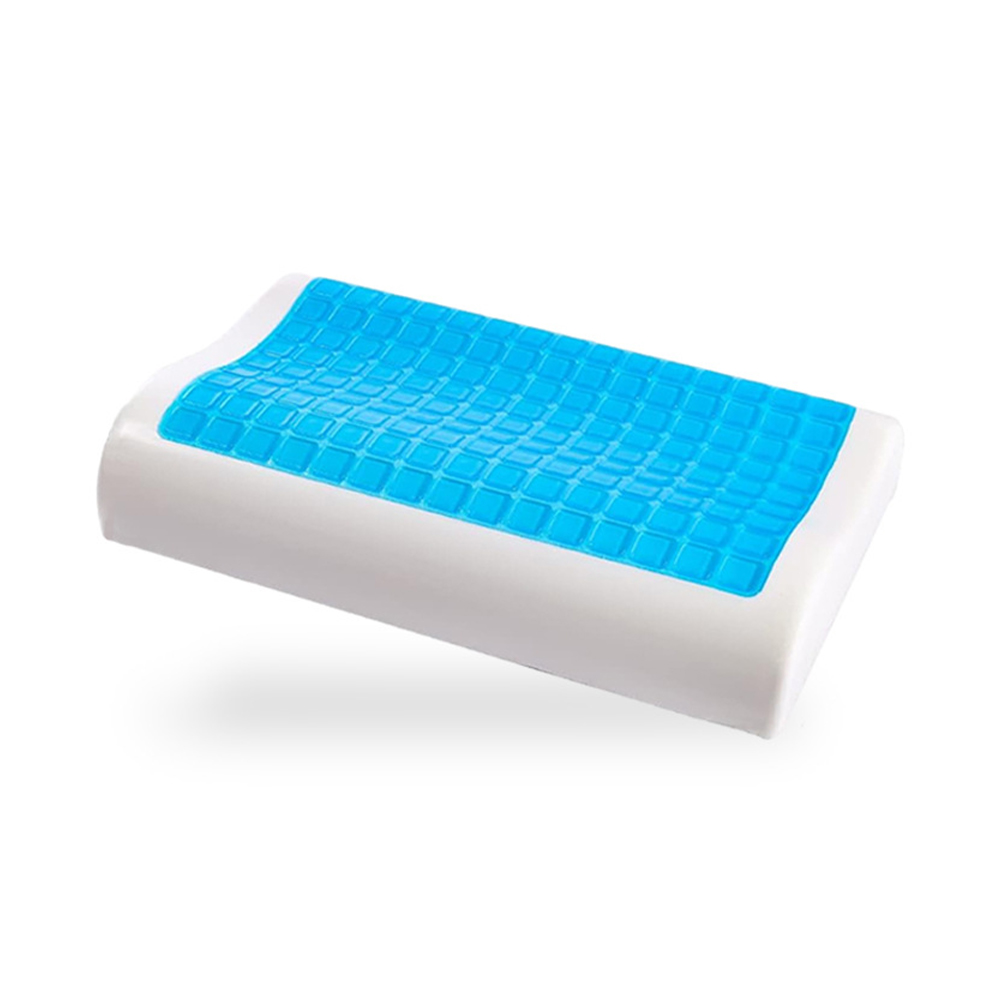
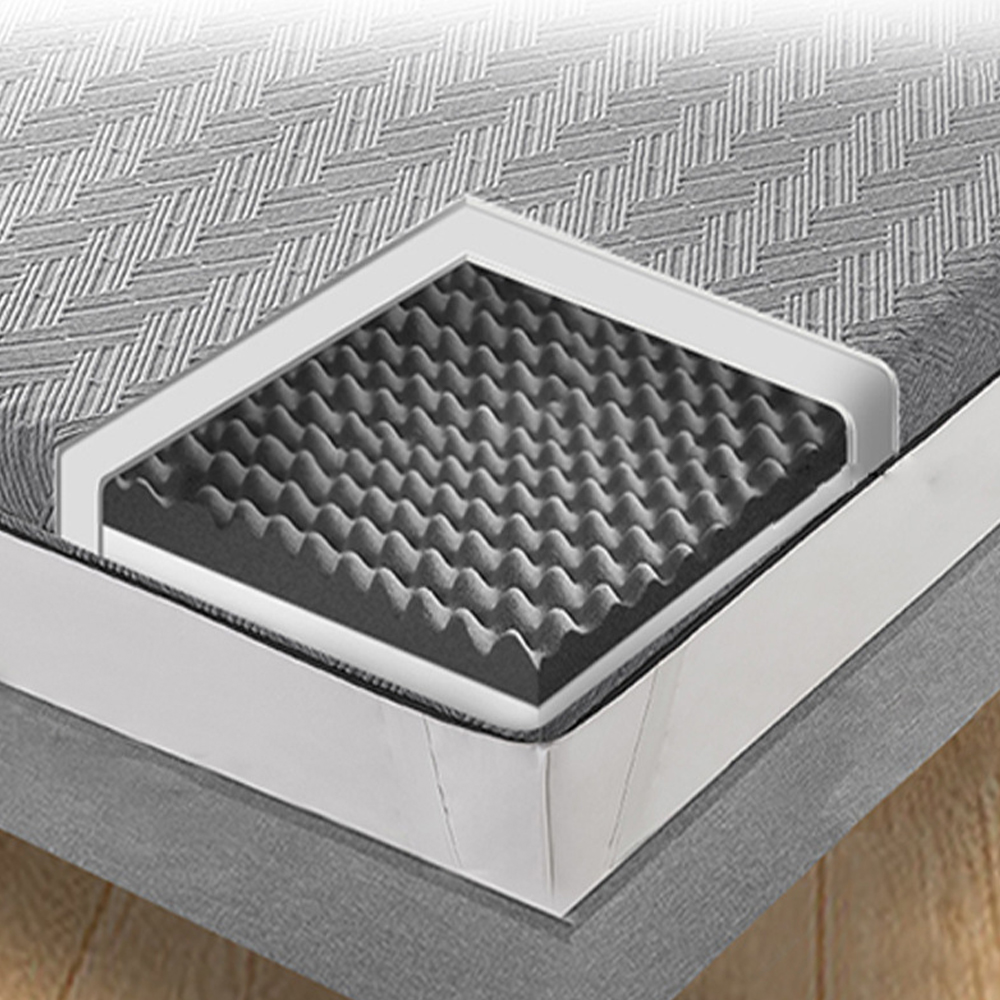 Gel-Infused Memory Foam Mattress with Removable CoverFeaturing gel particles for cooling and a herringbone embossed non-slip surface, this lightweight mattress can be rolled for storage and has a removable washable cover. It addresses warmth concerns and fits modern minimalist decor, making it a practical choice.View Product →
There is also a no-frame route. A Japanese-style folding mattress works as a complete floor-sleeping system, with gel foam layers built into a single portable pad. It eliminates the foundation question entirely if your room layout changes often or you prefer low-profile sleeping.
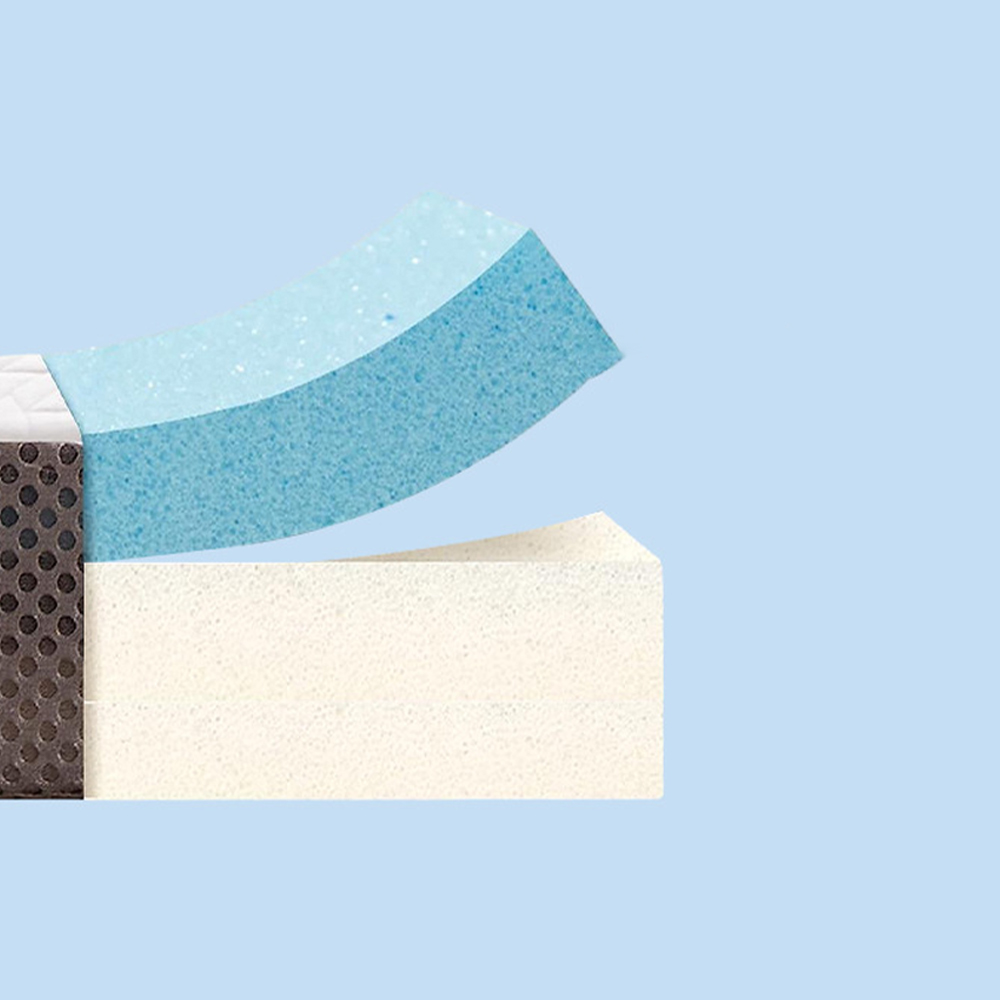 Japanese-Style Three-Fold Gel Memory Foam MattressThis foldable mattress uses slow-rebound foam with a gel layer for pressure relief and heat dissipation. Its three-fold design saves space and requires no foundation, making it ideal for floor sleeping, travel, or temporary use in compact rooms.View Product →
What the Warranty Actually Says
The visible damage is only half the risk. The other half appears the moment you file a warranty claim. Most memory foam warranties require the mattress to rest on a solid, rigid, non-flexing foundation; a coil box spring does not meet that requirement. Inspectors look at the underside of the foam during a claim, and the pattern of round depressions left by a coil deck is unmistakable.
Once a claim is denied, every cost becomes yours: the sagging mattress, the shipping, the disposal, and the replacement. Reading the warranty wording before your first night on the mattress is the cheapest protection you can buy.
Info: A warranty is not about whether the foam failed. It is about how the foam was supported. If the fine print says “solid foundation required” and you are using a coil box spring, the claim is invalid even if the foam itself is defective.
The Bottom Line on Memory Foam and Box Springs
Can you use a memory foam mattress on a box spring? If your “box spring” is a modern solid-top foundation with no springs, absolutely — it will perform exactly as designed. If it is a traditional coil box spring, the honest answer is no. The foam will follow the flex, develop permanent impressions, run hotter than necessary, and likely lose warranty protection.
Two minutes of inspection before you set the mattress down is enough to avoid the mistake. Press the surface, measure the gaps, read the warranty. If the base fails, move the foam to a platform, a slatted foundation, or an adjustable frame. The foundation is not where you save money; it is where you protect the mattress.
Success: A memory foam setup that lasts — a rigid flat foundation, open airflow around the sides, and a warranty that still protects the mattress on day one.
PREV:Can You Stand Up a Memory Foam Mattress? Yes, Here's How to Get Up Easily
NEXT:Can You Sit on a Memory Foam Mattress? Edge Damage Risks and Foam Recovery Facts
NEXT:Can You Sit on a Memory Foam Mattress? Edge Damage Risks and Foam Recovery Facts
Interested in cooperation or have questions?
Related News
WELLCARE was founded in 2003, boasting over a decade of profound and extensive experience.
Quick Links
Product
Media Centre
Contact Information
- [email protected]
- +86-517-84998062
- +86-15152354988
- No. 168 Nenjiang Road, Huaiyin District, Huai'an City, Jiangsu Province, China
Copyright © Jiangsu Wellcare Household Articles Co., LTD. All Rights Reserved.
Custom Memory Gel Mattress Manufacturers
