

 English
 日本語
日本語 Español

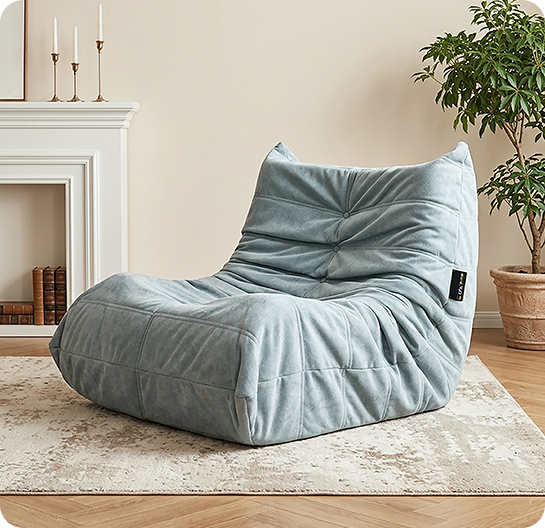
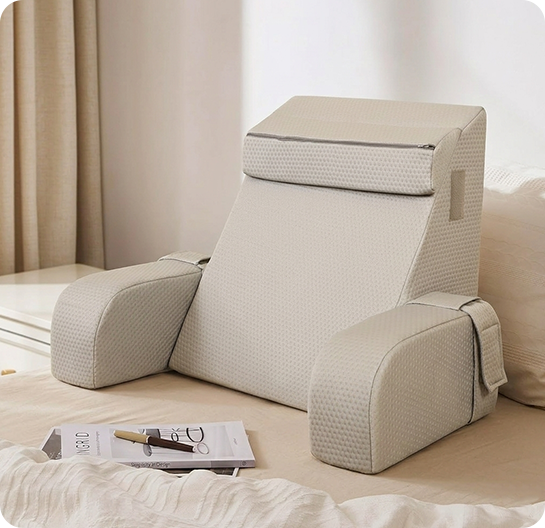
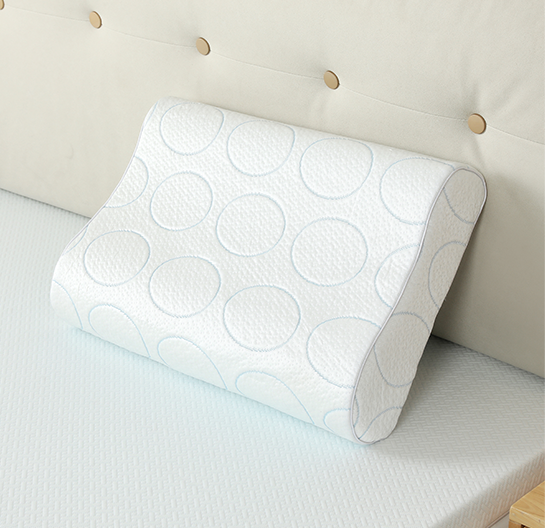
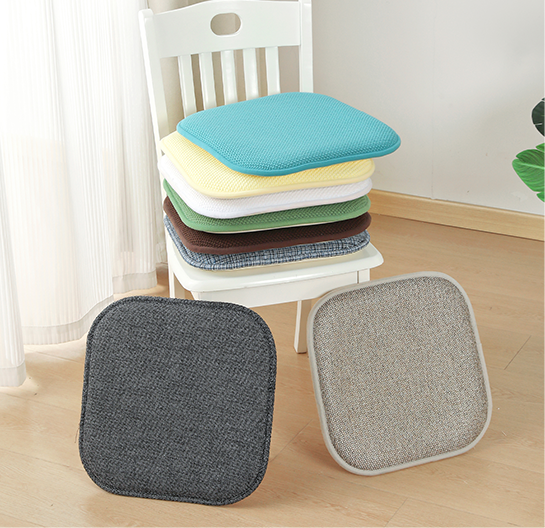
Configure Freedom, Embrace Togetherness
Designed for modern living spaces, this modular sectional sofa extends the signature “boneless” cloud-like comfort into each independent unit. Freely configure L-shapes, U-shapes, or creative layouts to build your perfectly tailored center of comfort, adapting effortlessly to your room and lifestyle.
Key Features
Layout Freedom: Flexible modules fit diverse layouts, efficiently optimizing compact spaces or filling expansive rooms.
Unified Comfort: Each module is crafted with high-density, slow-rebound foam, delivering zero-pressure support in every seat.
Social Hub: The fluid, enveloping design naturally facilitates conversation and connection, making it ideal for family time and entertaining.
Designed for households that value flexibility and high-quality gatherings. Here, comfort adapts to your form, making every get-together a relaxed and joyful experience.
-
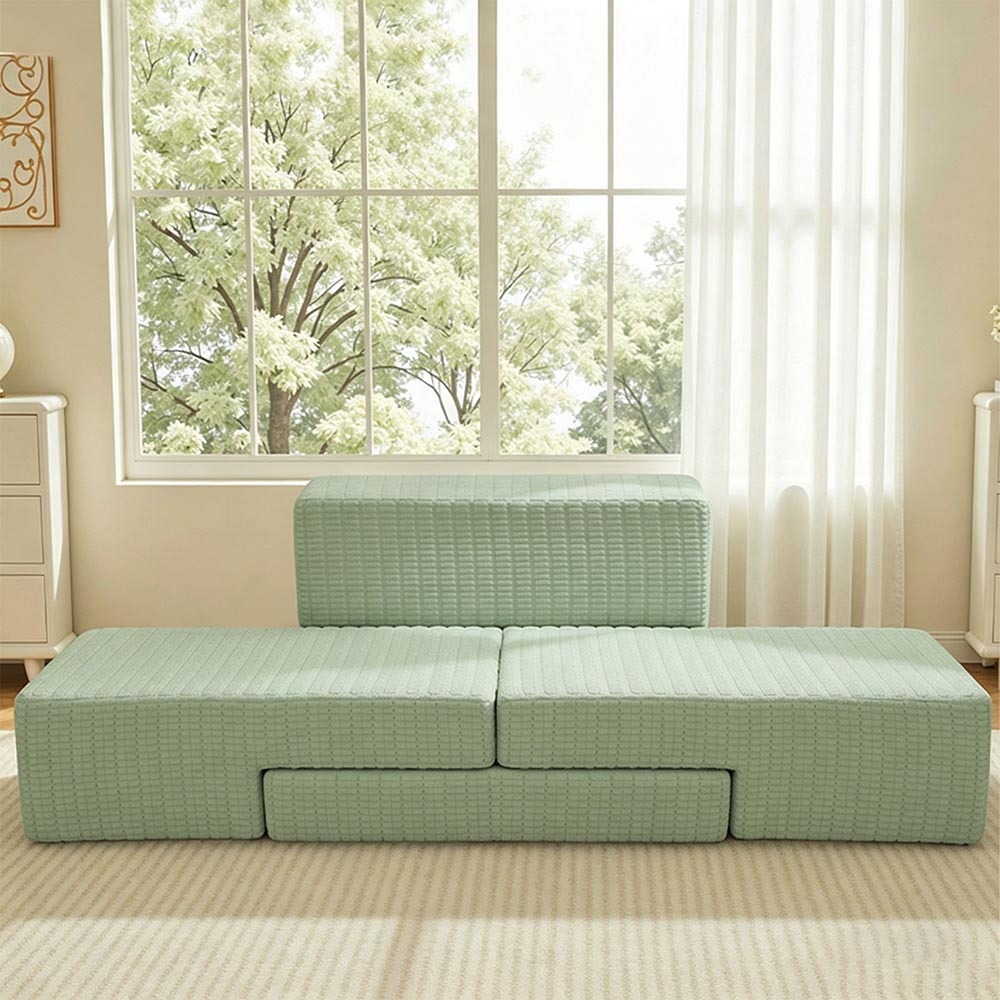 Multi-person modular sofa
Breaking away from the fixed form of traditional sofas, this modular sofa is based on the core concept of "fre...
-
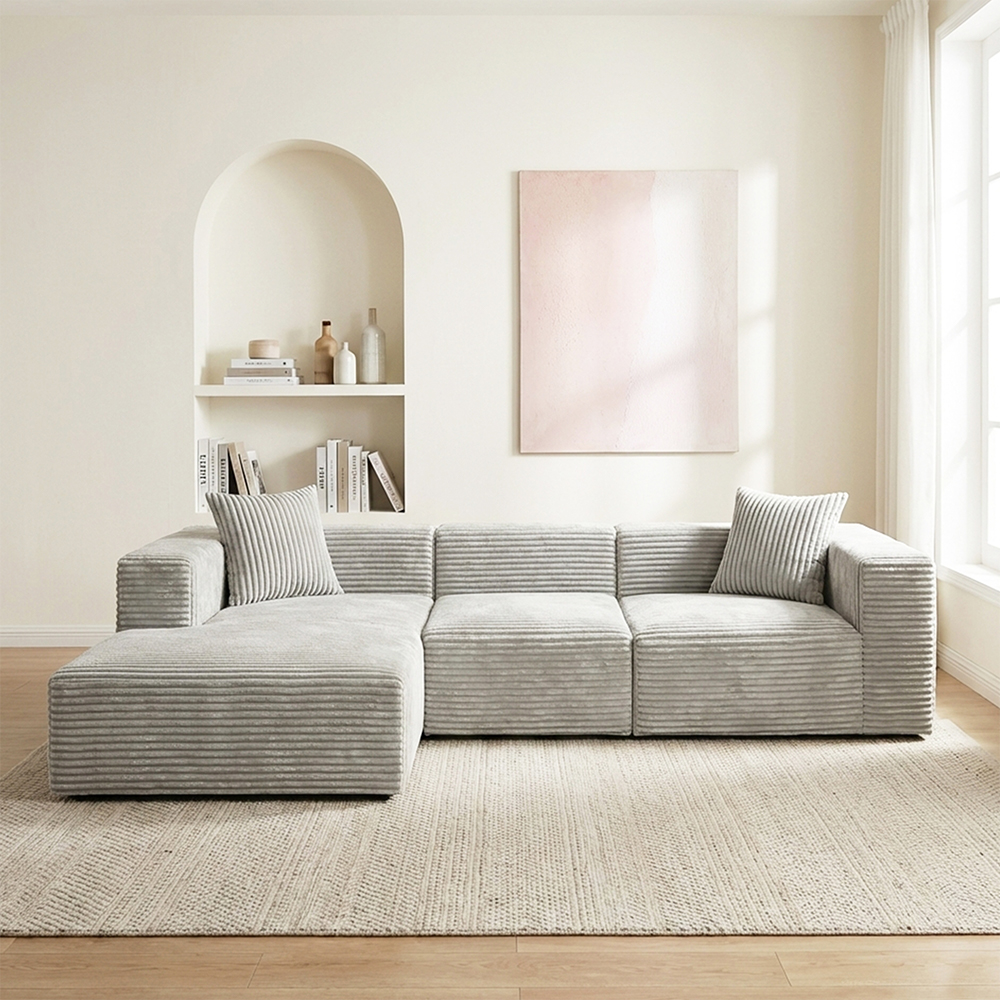 Gray multi-seater sofa
This sofa features a spacious L-shaped structure that creates an immersive relaxation space. Delicate striped ...
About Wellcare
Jiangsu Wellcare Household Articles Co., LTD.
As a famous China Sectional Sofa Manufacturers and Sectional Sofa Factory, WELLCARE was founded in 2003 and has long been dedicated to the R&D and manufacturing of high-performance sleep materials and healthy home products. Centered on material innovation, the company keeps exploring foam solutions that are more comfortable, safer and more reliable to serve the global sleep market.
Led by a doctor-led R&D team, the company develops more than one hundred new foam materials every year. The product portfolio covers ordinary sponge, memory foam, gel foam, temperature-insensitive memory foam, quick-dry memory foam, flame-retardant sponge, antibacterial sponge and other categories, with continuous optimization of formulas and structural performance.
Led by a doctor-led R&D team, the company develops more than one hundred new foam materials every year. The product portfolio covers ordinary sponge, memory foam, gel foam, temperature-insensitive memory foam, quick-dry memory foam, flame-retardant sponge, antibacterial sponge and other categories, with continuous optimization of formulas and structural performance.
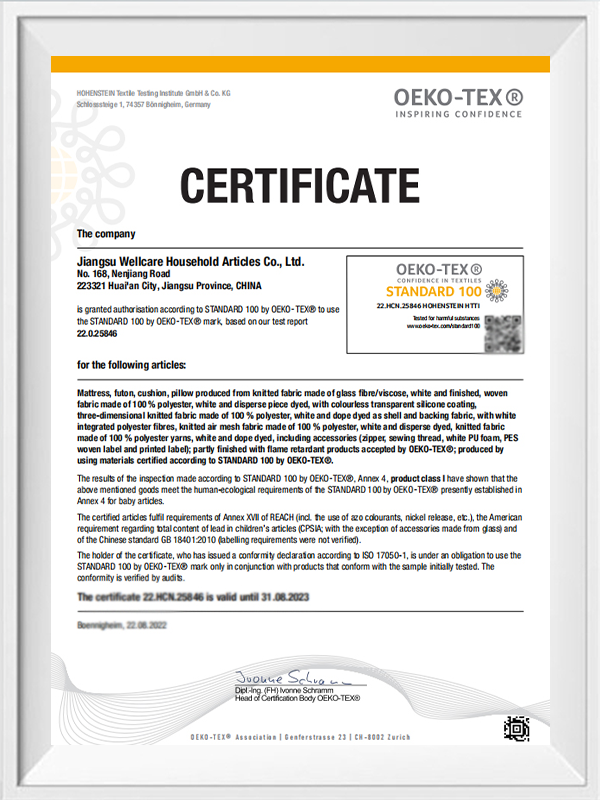
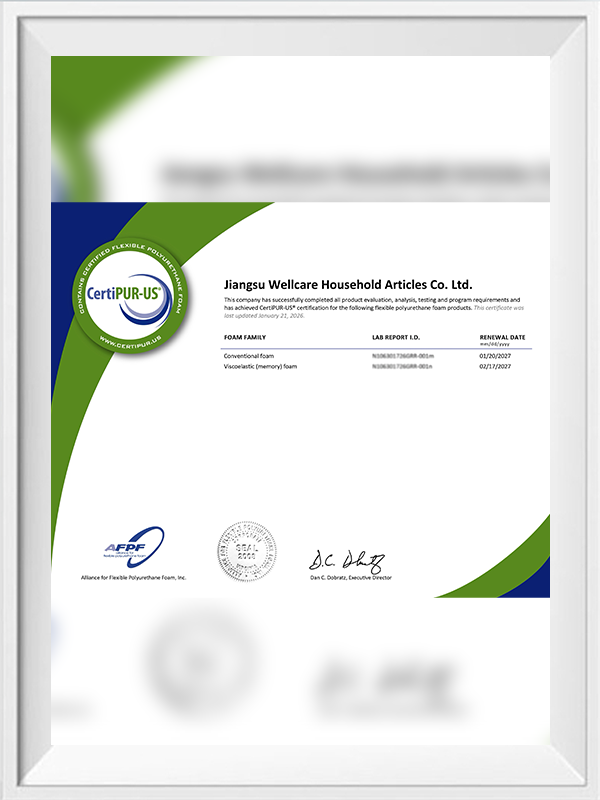
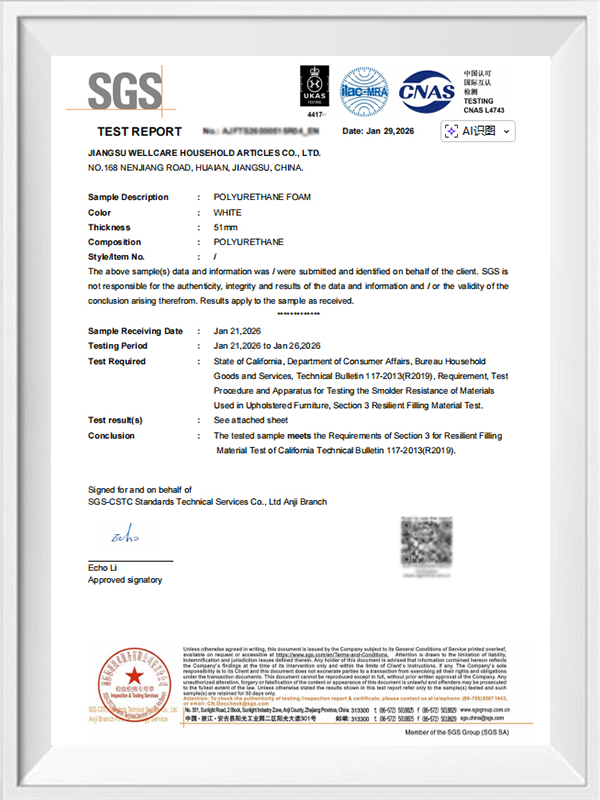
Certificate Of Honor
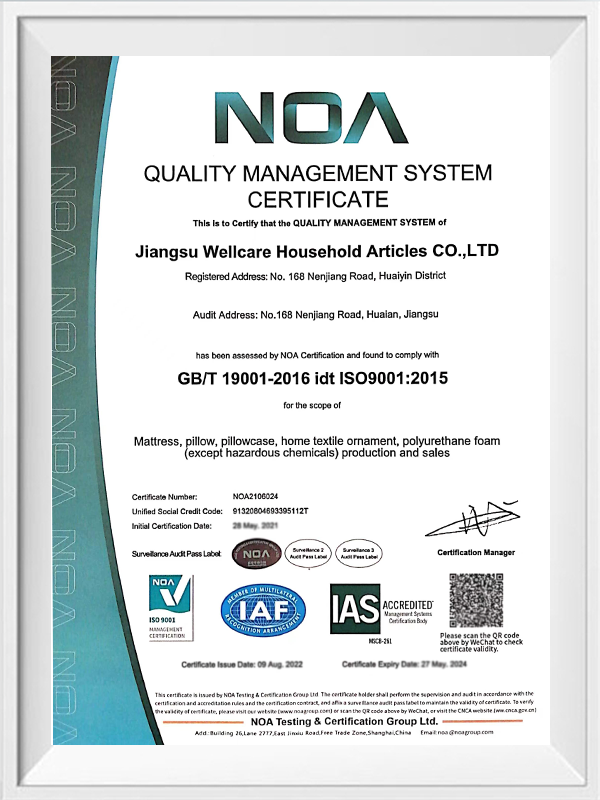
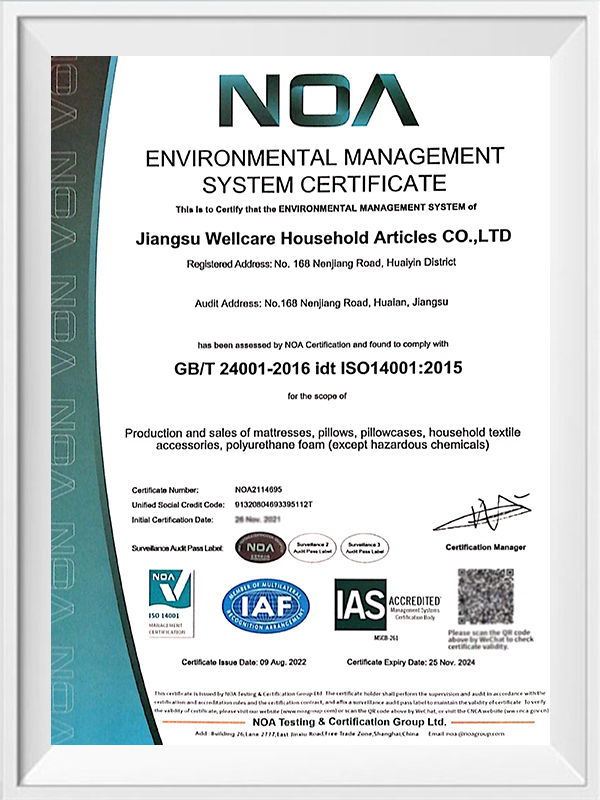
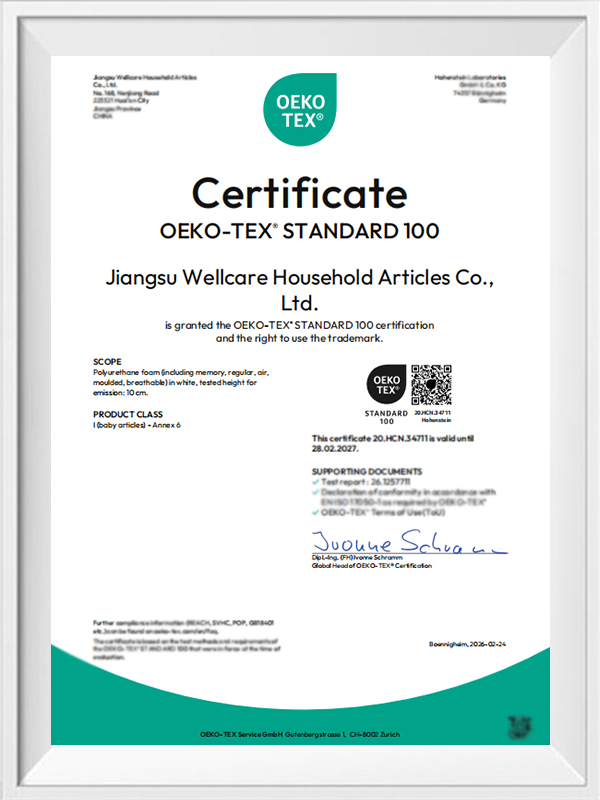
Message Feedback
Sectional Sofa Industry knowledge
Jiangsu Wellcare Household Articles Co., Ltd. engineers Sectional Sofa systems around our core foam technology. As a China-based Sectional Sofa manufacturer, we supply modular boneless seating for residential, hospitality and contract projects. Each module uses high-density, slow-rebound foam to deliver consistent zero-pressure support across L-shape, U-shape and custom layouts.
Our range extends from compact two-module configurations to multi-piece arrangements for large living spaces. We support OEM and ODM programs with flexible density selection, cover material options and module geometry tailored to your market.
Modular Sectional Sofa Range
We build sectional sofas as independent foam modules that connect without rigid frames. This approach simplifies shipping, on-site assembly and reconfiguration. Available module types include:
- Corner modules – 90-degree units for L-shape and U-shape layouts
- Armless middle modules – extend seating length without visual interruption
- End modules with armrests – define the sofa boundary and provide lateral support
- Ottoman modules – add leg support or convert into chaise configurations
Each module is cut from a single foam block or assembled from layered foam sheets, depending on the required firmness profile. We can produce modules with integrated backrests or separate back cushions.
Foam Engineering for Sectional Seating
Our sectional sofa comfort relies on controlled foam density and resilience. We formulate foam in-house, which allows us to adjust the support layer and comfort layer independently.
| Foam Layer | Typical Density Range | Function |
|---|---|---|
| Support core | 35–55 kg/m³ | Maintains seat height and prevents bottoming out |
| Comfort layer | 25–40 kg/m³ | Provides initial softness and pressure relief |
| Edge reinforcement | 45–60 kg/m³ | Prevents edge collapse and maintains shape |
We can incorporate gel-infused memory foam for cooler seating, temperature-insensitive foam for consistent firmness across climates, and flame-retardant or antibacterial formulations where required.
Configuration and Customization
Our OEM/ODM process starts with your layout drawing or reference images. We then define module dimensions, foam specifications and cover requirements. Common customization variables include:
- Overall width, depth and seat height
- Number and type of modules
- Foam density and firmness per layer
- Cover fabric: woven, knit, velvet, leatherette or customer-supplied material
- Removable vs. fixed covers
- Connector system: hook-and-loop, zipper or buckle
- Packaging: flat-packed modules or assembled units
We provide pre-production samples for approval. For large projects, we can produce a pilot run to validate assembly and comfort before mass production.
Application Fit
Our sectional sofas are used in environments where flexible seating and easy reconfiguration matter:
- Residential living rooms – L-shape and U-shape layouts for family use
- Apartments and compact spaces – modular units that fit through narrow doorways
- Hospitality suites and lounges – durable foam with high resilience for frequent use
- Office breakout areas – informal collaborative seating
- Retail displays and showrooms – custom shapes to match brand aesthetics
Because modules are independent, damaged sections can be replaced without discarding the entire sofa. This reduces long-term ownership cost for commercial buyers.
Quality Control and Acceptance
Our factory follows continuous foaming, mold forming, precision cutting and post-processing. For sectional sofa production, we control:
- Foam density and hardness within ±5% of specification
- Dimensional tolerance of ±5 mm on cut modules
- Cover seam strength and zipper durability
- Connector pull-out force
- Compression set after 24-hour load test
We provide inspection reports with each shipment. For OEM orders, we can align with your incoming QC checklist and provide batch samples for third-party testing if required.
Information We Use to Configure Your Solution
To prepare an accurate proposal, we need the following project details:
- Target market and end-use environment (residential, hospitality, contract)
- Desired overall dimensions and layout (L-shape, U-shape, custom)
- Number of seats or modules required
- Foam firmness preference (soft, medium, firm) or reference product
- Cover material and color requirements
- Any regulatory requirements (flammability, chemical emissions)
- Estimated annual quantity and packaging preference
With this information, we can recommend a module configuration, foam stack-up and cover specification, and provide a quotation with lead time.
Frequently Asked Questions
What is the minimum order quantity for custom sectional sofas?
We offer flexible MOQ for OEM projects. For standard modules, MOQ can be as low as 50 units per design. For fully custom configurations, we typically require 100–200 units depending on foam and cover complexity.
Can you match a specific foam firmness from a reference sample?
Yes. We can measure the density and indentation force deflection (IFD) of your reference sample and formulate our foam to match within a reasonable tolerance. We provide lab samples for approval before production.
Do you provide covers or can we supply our own fabric?
We can source and sew covers in-house, or we can work with customer-supplied fabric. If you provide fabric, we need the technical specifications for cutting and sewing, and we will conduct a seam strength test on the first article.
How are the modules connected?
We typically use heavy-duty zippers or hook-and-loop strips on the underside of modules. For commercial applications, we can add metal brackets or interlocking pins for a more rigid connection.
What is the lead time for a custom sectional sofa order?
After sample approval, mass production lead time is usually 20–30 days, depending on order quantity and cover complexity. We can provide a more precise schedule once the configuration is finalized.
Related Products and Categories
Our portfolio also includes Product, Boneless Sofa, Single Seater Sofa for applications with different operating ranges, interfaces or integration requirements.
WELLCARE was founded in 2003, boasting over a decade of profound and extensive experience.
Quick Links
Product
Media Centre
Contact Information
- [email protected]
- +86-517-84998062
- +86-15152354988
- No. 168 Nenjiang Road, Huaiyin District, Huai'an City, Jiangsu Province, China
Copyright © Jiangsu Wellcare Household Articles Co., LTD. All Rights Reserved.
Custom Sectional Sofa Suppliers
