

 English
 日本語
日本語 Español


Industry News

Home / Media Centre / Industry News / Can You Sit on a Memory Foam Mattress? Edge Damage Risks and Foam Recovery Facts
Product Category
NEW Category
Contact us
Can You Sit on a Memory Foam Mattress? Edge Damage Risks and Foam Recovery Facts
Wellcare Technical Briefing: Sleep Material Research
Can You Sit on a Memory Foam Mattress?
Two decades of foam manufacturing have taught us what actually happens when you sit, perch, or settle into the same spot night after night.
You have just unzipped the delivery bag on a new memory foam mattress. The first night is forgiving, almost unexpectedly comfortable. But the next morning, as you sit on the edge to pull on your socks, a quiet worry appears: is the foam gradually flattening under my weight?
We hear that worry often at Wellcare, where since 2003 we have designed and manufactured memory foam mattresses, pillows and toppers for retail partners in North America, Europe and Japan. Our durability lab runs months of pressure and recovery testing before a formulation ships. Based on that experience, the answer is reliably reassuring, with a few honest caveats.
The Short Answer: Yes, You Can Sit — With a Caveat About Repetition
A memory foam mattress is engineered to carry body weight, and everyday sitting will not hurt it. Perching on the side of the bed while talking, sitting up in the morning to drink tea, or kneeling on the foot of the mattress to reach a lamp are normal moments. The foam handles them easily.
The caveat is repetition. Memory foam is viscoelastic: it softens with body heat and yields slowly under pressure. During sleep, your body weight spreads across a large surface, which is precisely why the material feels so comfortable. Sitting is different. A seated body pushes through two small sit bones, concentrating an entire evening of weight into the area of a sheet of paper. When such focused pressure lands in the same spot every day, the foam's internal cell structure gradually takes a permanent set.
Static loads are the real enemy. A suitcase left on the bed overnight, a stack of boxes while you unpack, or several hours of sitting on a single spot compresses the foam far more than a full night of sleep. Held in one position that long, the cell walls cannot fully re-expand once you stand up.
Why Sitting Stresses Memory Foam More Than Sleeping Does
Foam engineers assess sitting risk by measuring pressure per square centimetre. During sleep, the body spreads its weight over hundreds of square centimetres of foam, producing a distributed load that the material absorbs easily. A seated body, by contrast, channels roughly the same weight through two contact points. The measured result is a three-to-four-fold increase in local pressure at the foam surface.
The data from our own manufacturing background matches production reality. A standard 40 kg/m³ memory foam, loaded with a seated-weight indenter for twenty minutes, recovers fully after a short rest. But when the same test is repeated in the same location hundreds of times without adequate relaxation between cycles, the foam's cell structure slowly takes a measurable set. The mattress is not broken; it simply develops a tired zone in one precise area.
"A single sitting session almost always recovers. The damage curve appears when the same spot is loaded hundreds of times before the material has had time to relax."Wellcare Foam Research Team
| Foam density | Typical feel | Recovery after repeated sitting | Best use case |
|---|---|---|---|
| 25–35 kg/m³ | Soft and plush; sinks easily | Slow — temporary marks can last hours | Guest rooms, occasional use |
| 40–50 kg/m³ | Balanced comfort with quiet support | Good, especially with regular rotation | Everyday family bedrooms |
| 55 kg/m³ and above | Dense and firm, resilient | Fast — minimal visible compression | Edge sitting, heavier users |
A small compression set is normal ageing. A few millimetres of permanent flattening over years of use is not damage. Begin to worry only when a visible depression forms in one sitting zone while the foam around it remains flat and supportive.
The Edge: Where Sitting Damage Actually Appears
Most owners expect indentations to start at the centre of the bed. In practice, the edge is the more vulnerable zone. When you sit on the side of a memory foam mattress, the foam sidewall carries your full weight with no structural support on the outside. The load pushes inward and downward at the same time, a combination of compression and shear that taxes the outer cell layer far more aggressively than lying in the centre.
This is precisely why higher-spec memory foam mattresses today use reinforced edge rails and zoned support systems. In a zoned construction, the perimeter is moulded from a firmer formulation while the sleeping surface retains its softer pressure-relieving character. That reinforcement tolerates routine sitting — putting on shoes, watching television from the side of the bed — without accelerating edge roll-off.
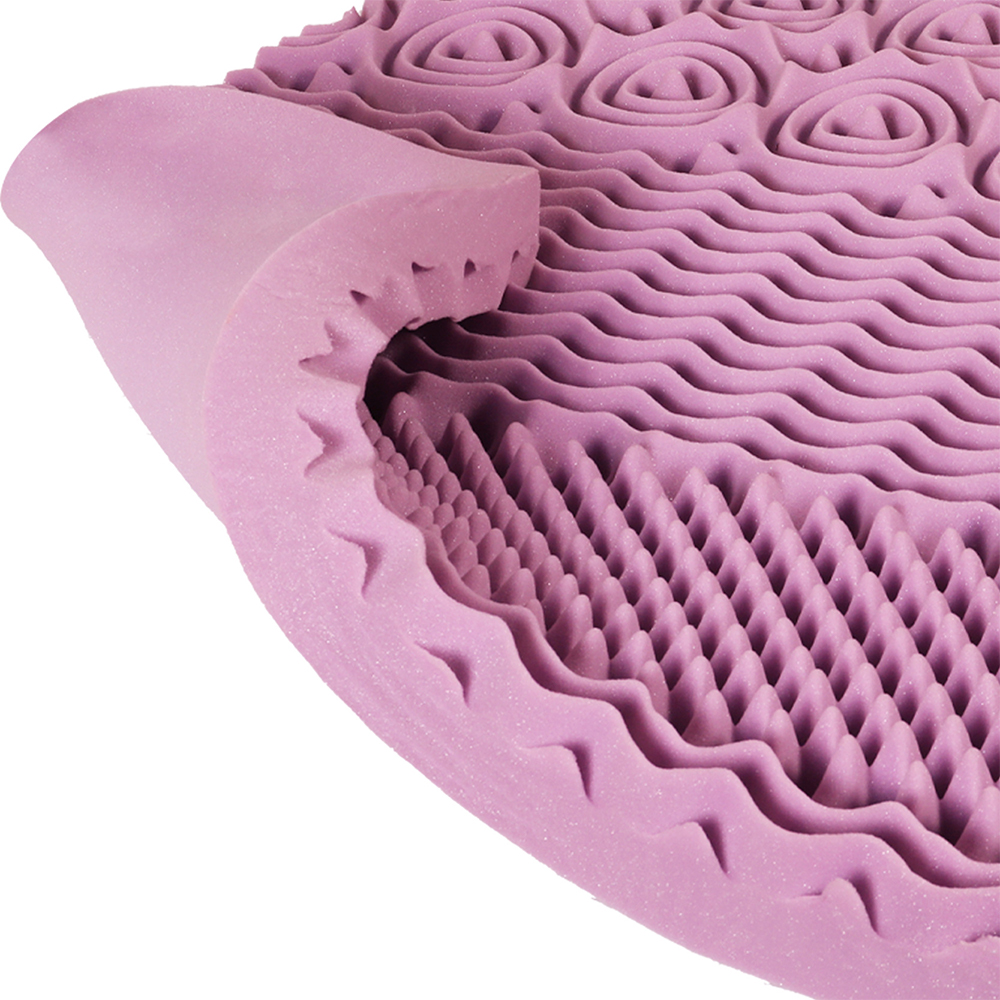 Zoned Memory Foam Mattress with Seven-Zone SupportThis mattress uses zoned construction to reinforce edges and support routine sitting, making it a practical choice if you often sit on the side of the bed without worrying about edge roll-off.View Product →
Reinforcement reduces risk, not physics. A firm edge rail keeps the mattress stable when you sit, but it does not make the sidewall indestructible. A long evening session in the same edge position, repeated nightly, will still fatigue the foam faster than normal use. Moderation is part of the formula.
How to Sit on a Memory Foam Mattress Without Damaging It
You do not need to tiptoe around your mattress. A few practical habits keep the foam healthy while you enjoy sitting in bed as much as sleeping in it:
- Vary the spot. Move between the side, the foot and the centre. Spreading the load across multiple zones is the most effective way to prevent compression set.
- Keep extended sessions under thirty minutes. Reading for two hours in exactly the same position daily is where permanent indentations begin.
- Rotate the mattress every few months if the manufacturer allows it. Turning it 180 degrees shifts the sitting area to the opposite end and gives the stressed zone time to recover.
- Add a protective layer. A separate gel or memory foam pad absorbs most of the concentrated pressure, protects the underlying surface, and can be aired or replaced easily when it wears.
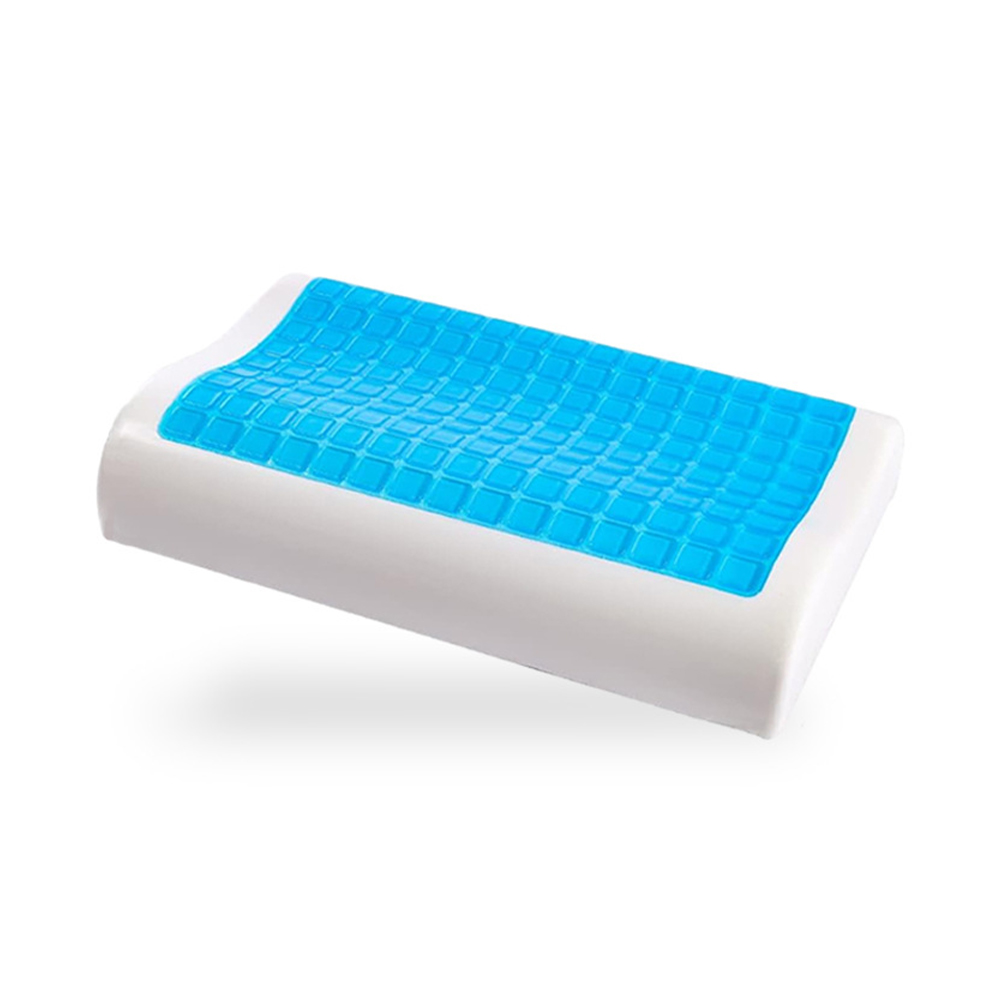
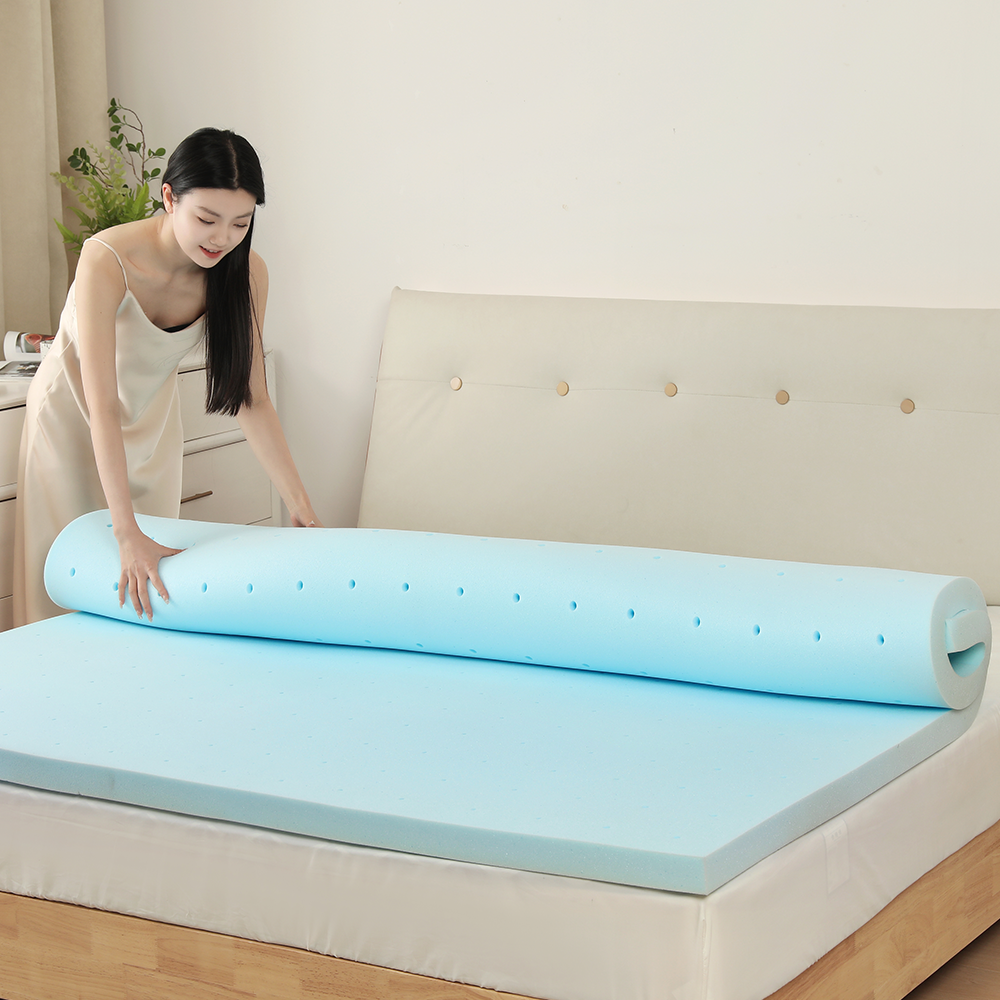 Memory Foam Gel Pad with Breathable PerforationsA gel-infused, perforated memory foam pad that stays cool and supportive; ideal for beds, tatami, or floor use, especially when you need comfort for sitting, napping, or temporary setups.View Product →
Spread the load, limit the session, rotate, and add a topper. These four habits prevent the vast majority of sitting-related indentations we see in returned products and warranty claims.
What to Look For If You Will Sit on the Bed as Much as You Sleep on It
If you already know your mornings involve pillows propped against the headboard, a laptop open, or a child climbing in for a story, treat sitting tolerance as part of your specification. Four details make a measurable difference:
- Density. Choose foam rated at 40 kg/m³ or higher. Dense formulations on the 55 kg/m³ end recover fastest and resist seated impressions best.
- Edge reinforcement. Ask whether the perimeter uses a firmer foam rail. It is the single most effective feature for edge-sitting tolerance.
- Zoned support. A multi-zone design distributes a seated load across a wider area, preventing one section from absorbing all the pressure.
- Rebound behaviour. Classic slow-rebound formulations deliver the deep, enveloping feel memory foam is famous for, but they recover more slowly after a long sit. If you value a quick return to shape, choose a formulation that springs back faster.
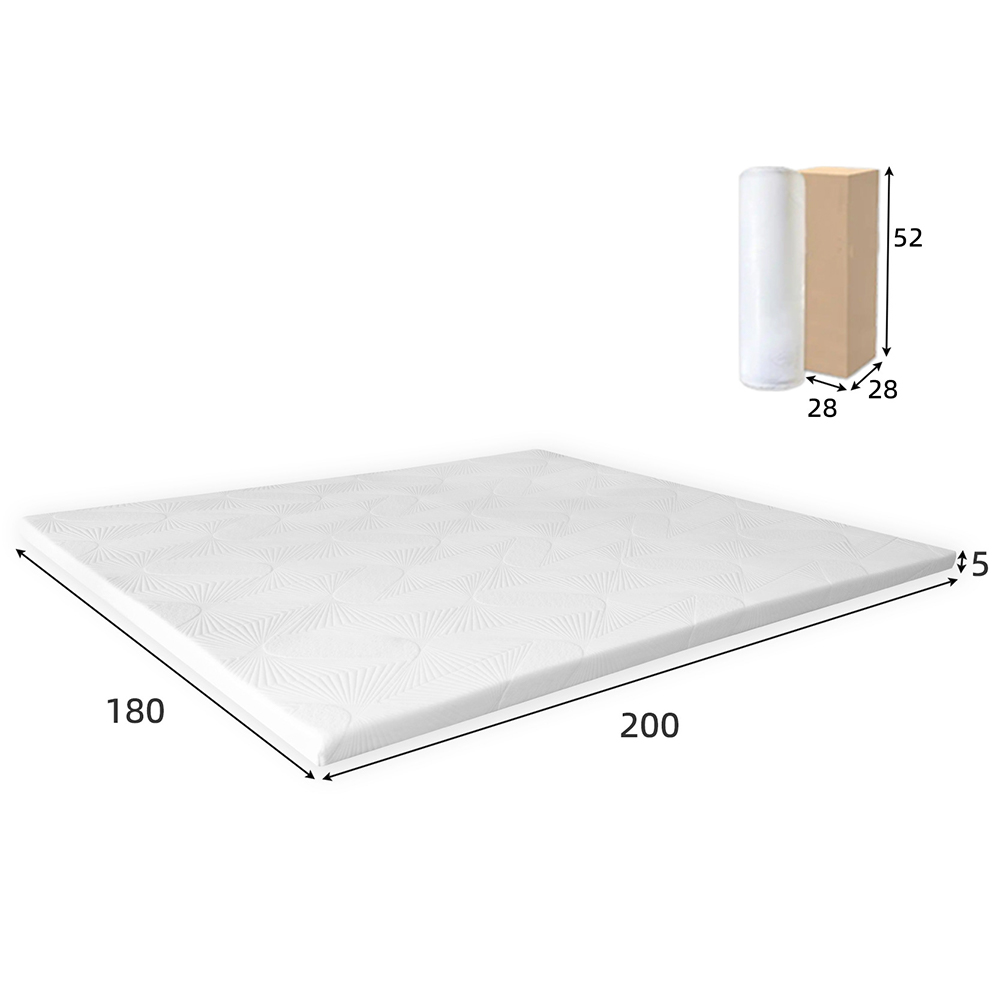 Slow Rebound Memory Foam Mattress with Quilted SurfaceThis high-density slow rebound mattress features a 3D quilted texture and thickened edges, combining comfort and durability; a solid option if you prioritize support, breathability, and long-term shape retention.View Product →
Also consider what sits beneath the mattress. On an adjustable base, the foam bends with the frame, so sitting stress distributes differently than on a fixed flat surface. Our guide to memory foam mattresses on adjustable bases explains the combinations that hold up best over years of use.
The Bottom Line: Sit, Sleep, and Stop Worrying
Can you sit on a memory foam mattress? Yes. The material is made for living, and every serious manufacturer tests for real-world behaviour, including sitting, before a product reaches the market. What you are protecting against is not a single session. It is the slow accumulation of concentrated pressure in one repeated location, particularly along a soft, unreinforced edge.
Choose a density that matches your habits, prefer a reinforced edge, add a protective topper if you spend long mornings in bed, and keep your sitting positions varied. A memory foam mattress selected with these considerations in mind will hold its silhouette for many years — and you will never need to hesitate before sitting down at the foot of the bed.
PREV:Can You Put a Memory Foam Mattress on a Box Spring? Yes, but Check the Coils
NEXT:Can a Memory Foam Mattress Go on a Slatted Base? A Complete Buying Guide
NEXT:Can a Memory Foam Mattress Go on a Slatted Base? A Complete Buying Guide
Interested in cooperation or have questions?
Related News
WELLCARE was founded in 2003, boasting over a decade of profound and extensive experience.
Quick Links
Product
Media Centre
Contact Information
- [email protected]
- +86-517-84998062
- +86-15152354988
- No. 168 Nenjiang Road, Huaiyin District, Huai'an City, Jiangsu Province, China
Copyright © Jiangsu Wellcare Household Articles Co., LTD. All Rights Reserved.
Custom Memory Gel Mattress Manufacturers
