

 English
 日本語
日本語 Español


Industry News

Home / Media Centre / Industry News / Are memory foam pillows actually good for you compared to traditional feather pillows?
Product Category
NEW Category
Contact us
Are memory foam pillows actually good for you compared to traditional feather pillows?
Sleep & Materials — A Close Reading
The Quiet Physics of a Good Night's Rest
Two materials, one pillowcase, and decades of sleep science standing between them. We put memory foam and feather to the only test that matters: what happens to your neck at 3 a.m.
The Verdict, Stated Plainly
For most sleepers, memory foam wins — not by a landslide, but by the kind of steady, repeatable margin that matters over a thousand consecutive nights. It holds spinal alignment more consistently than feather, resists the allergens that make feather difficult to live with, and simply lasts longer. Feather still has its moment — for stomach sleepers, for anyone who wants a pillow to feel like a cloud rather than a cast — but as a default recommendation, foam is the more defensible choice.
Why Contour Beats Compression
Feather pillows work by compression — plumes packed loosely enough to compress under the weight of a head, then spring back when the pressure lifts. It's an old, elegant mechanism, and for a few hours each night it performs beautifully. The trouble is consistency. As the plumes shift, the head keeps sinking unevenly, and by sunrise the neck has often spent several hours held at a slight, uncorrected angle.
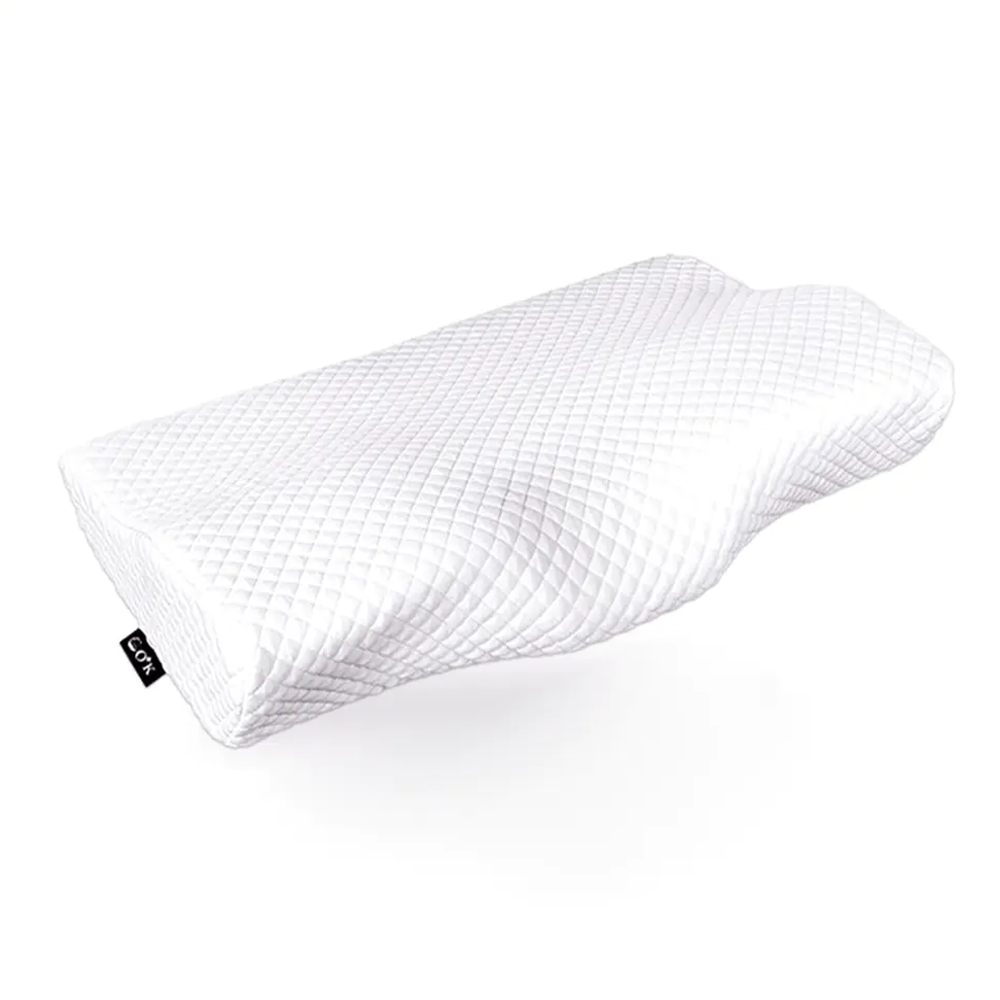
Memory foam solves the same problem differently. It is viscoelastic — it softens under body heat and slowly molds itself to the exact geometry of a neck and shoulder, then holds that shape until weight is removed. Pressure mapping studies consistently show foam distributing weight more evenly across contact points than loose fill, which is precisely why orthopedic specialists reach for it first when a patient describes recurring neck pain.
A pillow that reshapes itself every time you turn over isn't support. It's a coin flip, repeated all night.
Where Gel Enters the Picture
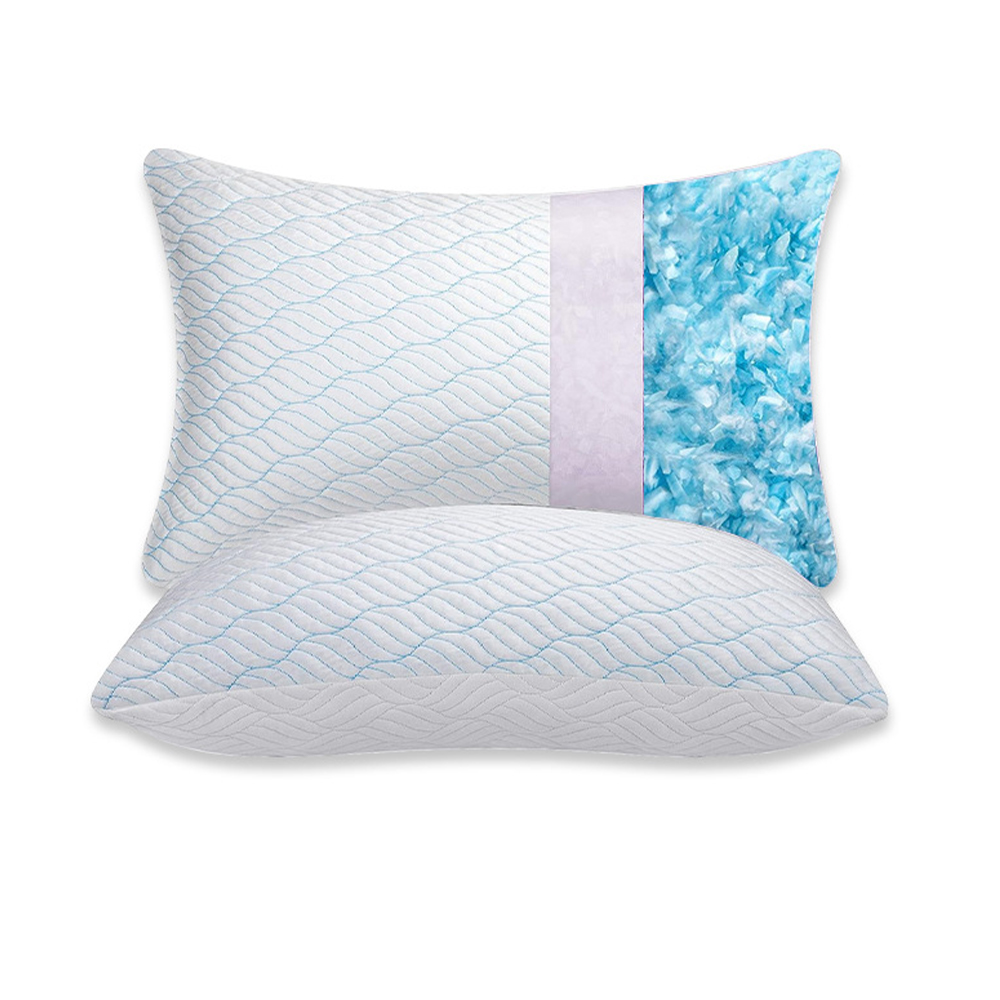
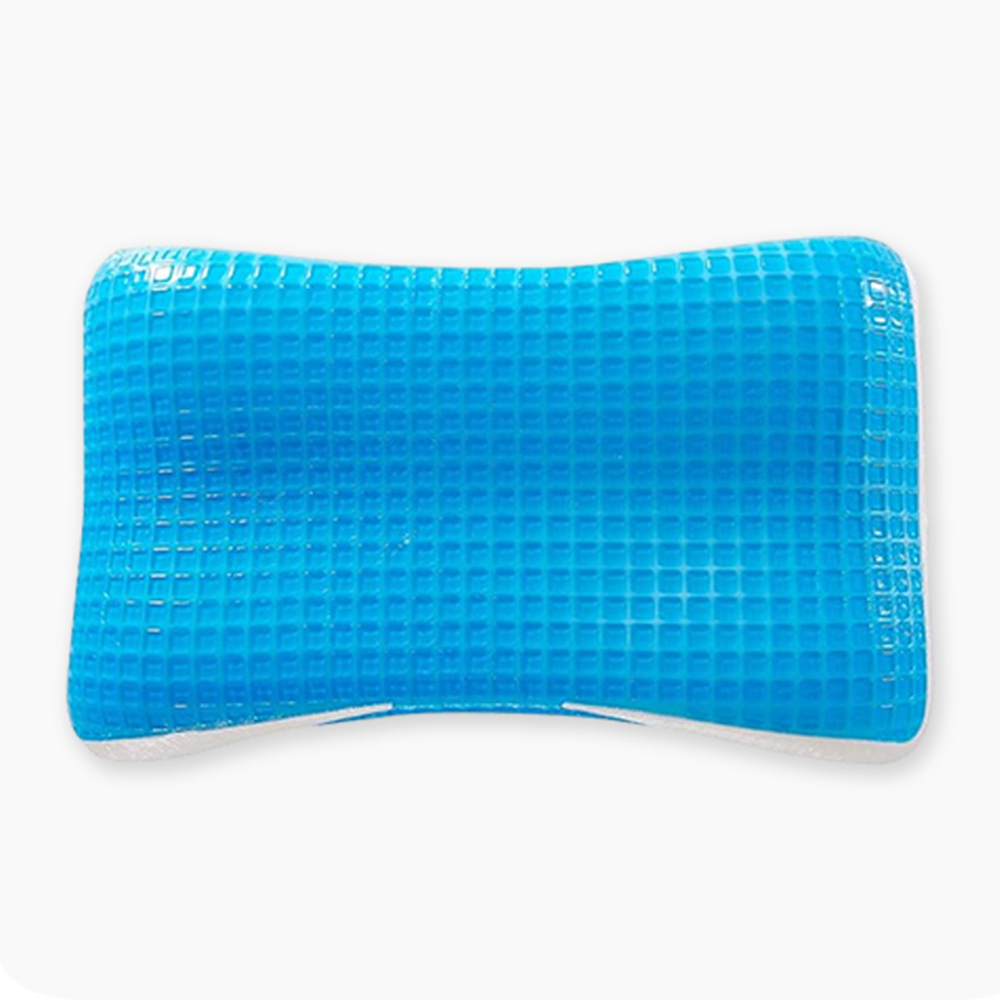
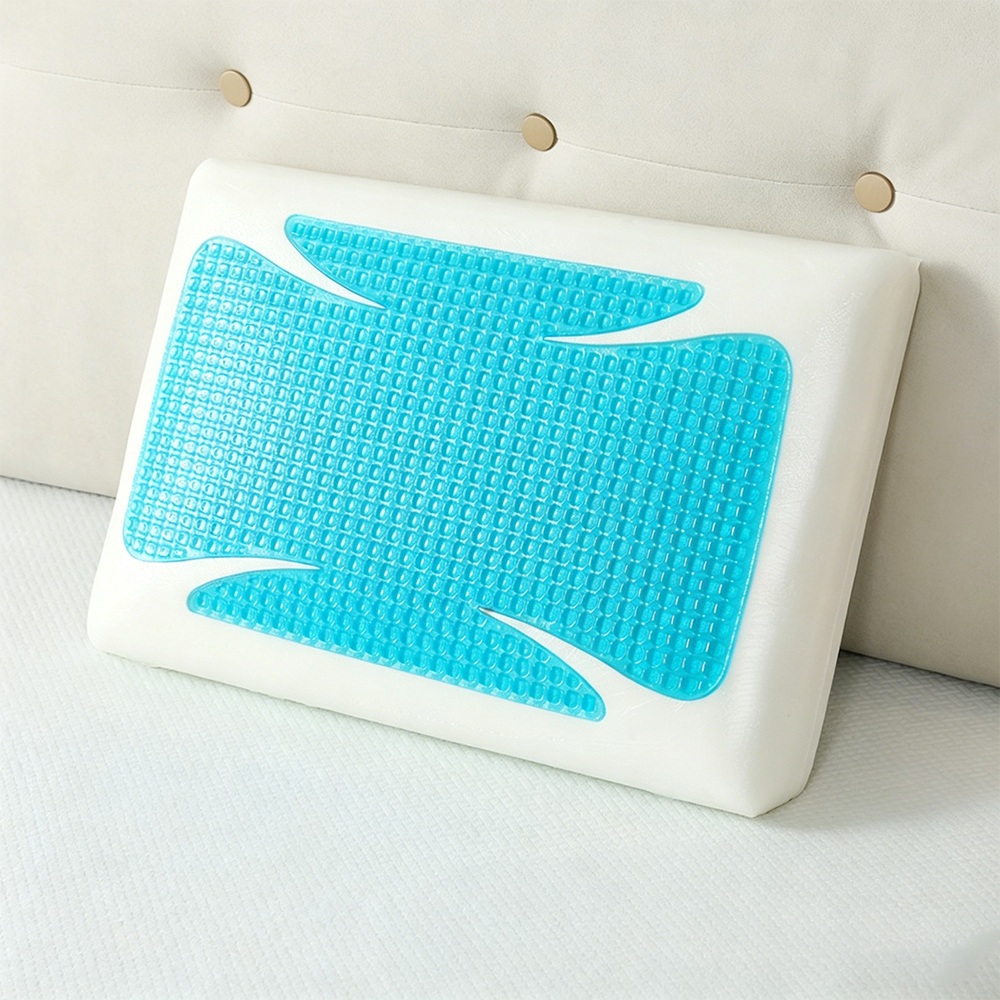
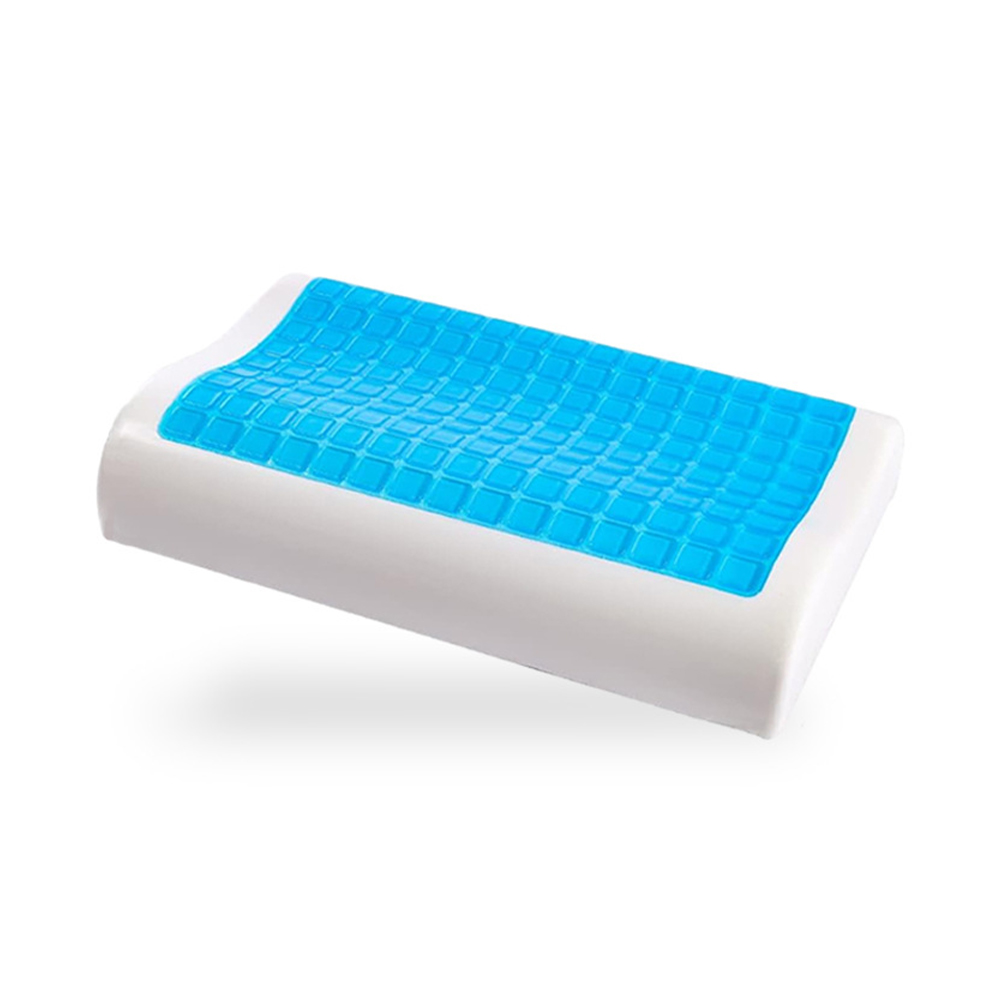
Standard foam has one honest weakness: heat. Its dense cell structure is excellent at holding a shape and poor at releasing warmth, which is why a well-made gel infused memory foam pillow has become the category's most requested upgrade. The gel layer — sometimes beads, sometimes a continuous sheet — absorbs heat before it accumulates, pairing the contouring benefit of foam with something closer to feather's breathability. For side and back sleepers who run warm, it is the version worth seeking out first.
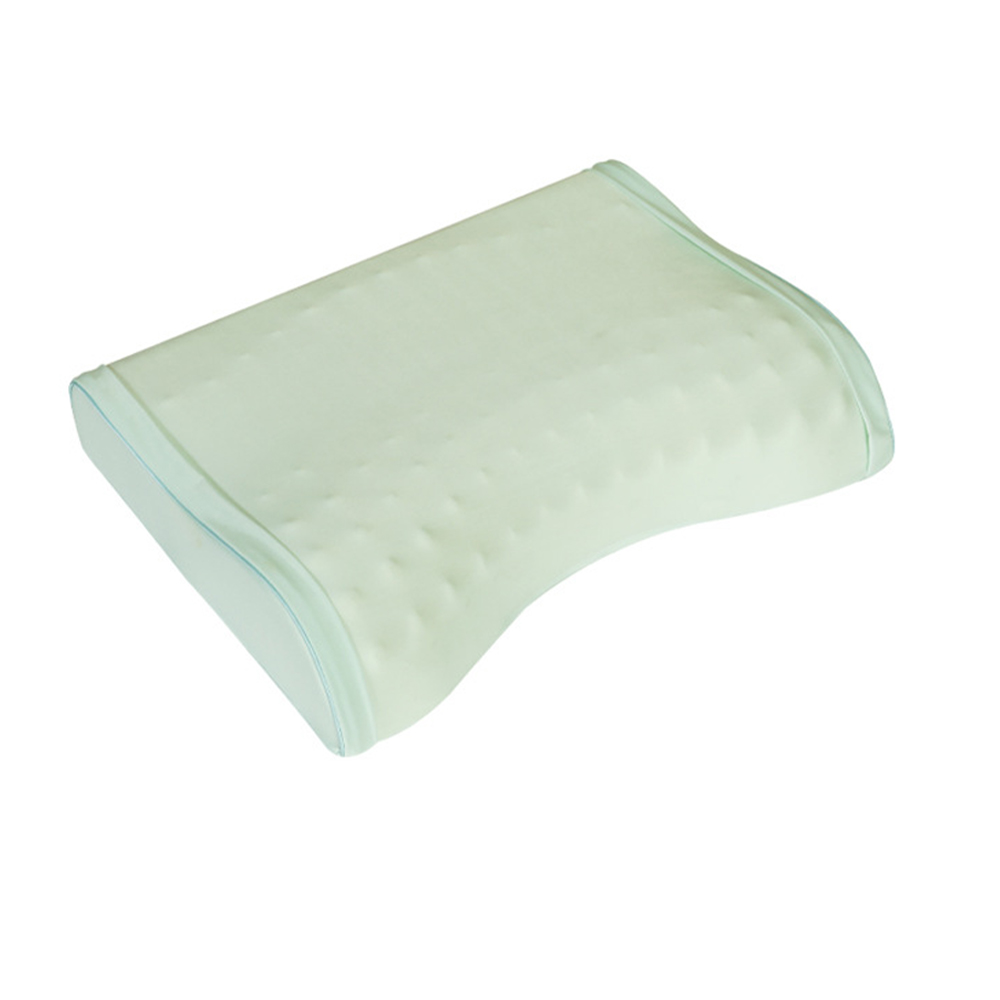
memory foam pillow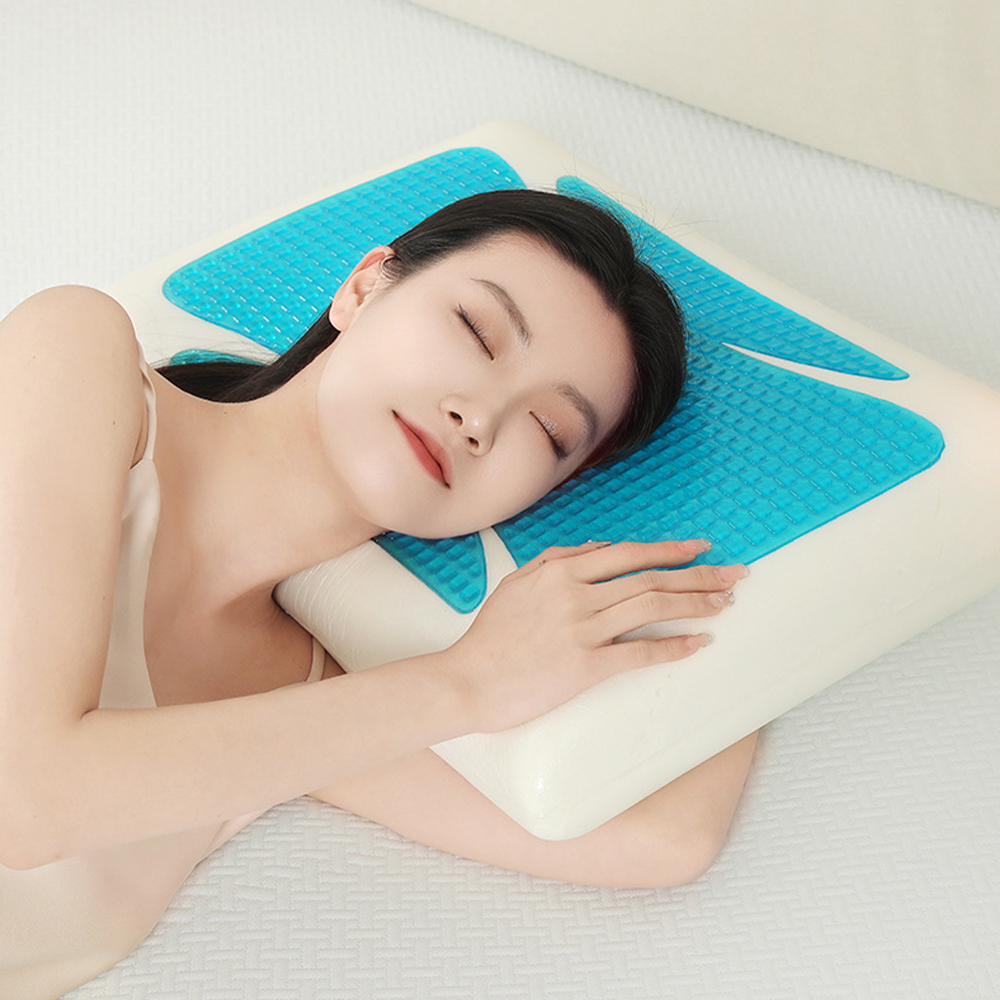
What Three to Five Years Looks Like
Durability is where the comparison stops being a matter of taste and starts being a matter of arithmetic. Feather pillows typically need replacing every twelve to eighteen months, as plumes clump and loft collapses. Foam, particularly at higher density, tends to hold its shape for three to five years.
| Characteristic | Memory Foam | Feather |
|---|---|---|
| Average lifespan | 3–5 years | 1–1.5 years |
| Shape retention | High | Low to moderate |
| Neck support | Consistent | Variable |
| Allergy risk | Low | Moderate to high |
Run the numbers over a five-year span and the higher upfront cost of foam tends to even out against two or three feather replacements — and that's before accounting for the inconsistent support delivered in the meantime.
Living With the Material You Choose
Feather's other quiet cost is hygiene. The hollow quills and soft down create pockets where dust mites, mold spores, and skin cells settle in, and no amount of laundering fully clears them out. Foam's closed-cell structure resists that buildup far more effectively, which is a meaningful point in its favor for anyone managing allergies or asthma.
Care Note
Washing a memory foam pillow is not the same job as washing a feather one. The foam core should never enter a washing machine or dryer — instead, spot-clean with a mild detergent, press out moisture gently, and air-dry completely before use. A removable, machine-washable cover does most of the real work and is worth prioritizing when shopping.
Worth Knowing
A foam pillow that stays damp inside for more than a day is at real risk of developing mold within the core, where it can't be seen or easily removed. Patience during drying isn't optional.
Matching Material to Position
Sleep position does more to determine the right pillow than any material spec sheet. A rough guide, drawn from how each type actually behaves through the night:
- Side sleepers — foam is the stronger default; it fills the shoulder-to-neck gap and keeps the spine level.
- Back sleepers — either can work, though a medium-loft foam pillow tends to hold its support more evenly across a full night.
- Stomach sleepers — a softer, lower-loft feather pillow is often more comfortable, since firm foam can over-elevate the neck.
- Combination sleepers — shredded or adjustable foam allows loft to be reshaped as position changes overnight.
Simple Rule
If you fall asleep on your side and wake up there too, foam earns its higher price the fastest.
Skip This
Avoid pairing a high-loft, firm foam pillow with stomach sleeping — the resulting neck angle undoes most of foam's alignment benefits.
The Short Version
Neither material is wrong, but one is a better bet more often. Memory foam offers steadier alignment, cleaner air quality, and a longer working life; feather offers a softness that some sleepers will never want to give up. Choose based on how you actually sleep, not how the pillow looks in a showroom — and whichever you pick, a breathable, washable cover will quietly extend its life by years.
PREV:How does a boneless sofa compare to a traditional sofa in terms of back and neck support?
NEXT:Is a Memory Foam Pillow the Ultimate Solution for Your Neck Pain and Better Sleep?
NEXT:Is a Memory Foam Pillow the Ultimate Solution for Your Neck Pain and Better Sleep?
Interested in cooperation or have questions?
Related News
WELLCARE was founded in 2003, boasting over a decade of profound and extensive experience.
Quick Links
Product
Media Centre
Contact Information
- [email protected]
- +86-517-84998062
- +86-15152354988
- No. 168 Nenjiang Road, Huaiyin District, Huai'an City, Jiangsu Province, China
Copyright © Jiangsu Wellcare Household Articles Co., LTD. All Rights Reserved.
Custom Memory Gel Mattress Manufacturers
